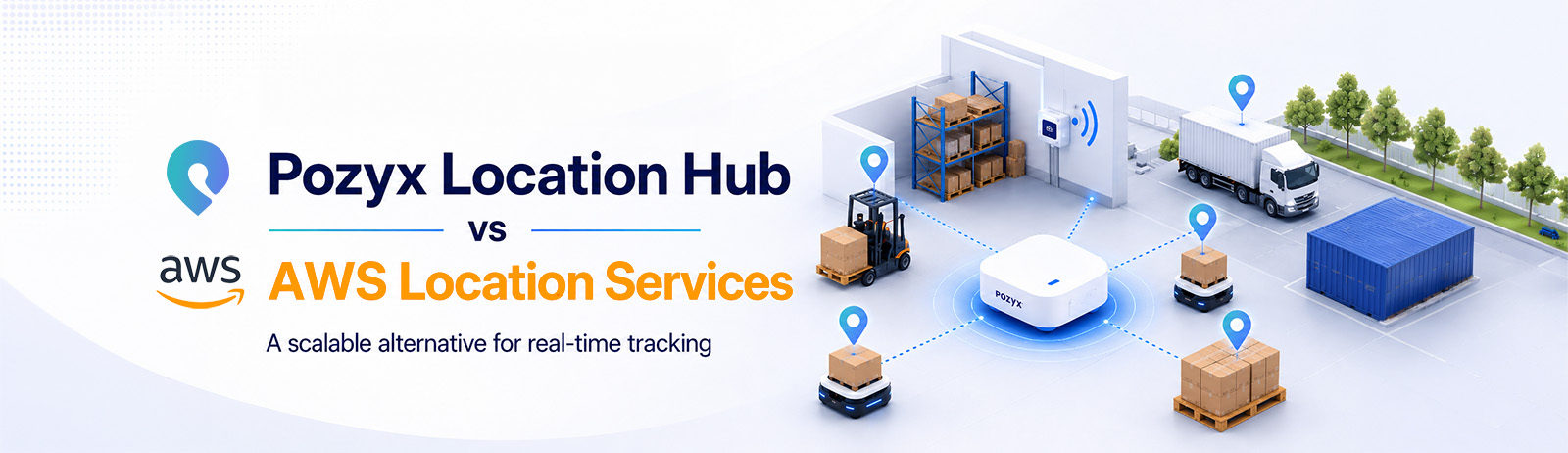
Der Pozyx Location Hub als Alternative zu Amazon Location Services

Zusammenfassung
Amazon Location Service, oft als ALS abgekürzt, ist ein AWS-Dienst, der Anwendungen um Karten, Ortssuche, Routing, Geocoding, Tracking und Geofencing erweitert. Amazon Location Service ist für Anwendungen mit geringer Frequenz und starkem Outdoor-Fokus konzipiert. Er funktioniert gut, wenn Assets nur gelegentlich Daten senden und Geofence-Auswertungen selten sind. Für Echtzeit- oder industrielles Tracking wird das Pay-per-Event-Modell von AWS jedoch extrem teuer.
Der Pozyx Location Hub bietet eine skalierbare Alternative zu Amazon Location Services, die sich besonders für interne Enterprise-Software-Teams eignet, die eigene maßgeschneiderte Anwendungen, Dashboards, Workflows oder Analysen entwickeln möchten, ohne an unvorhersehbare Kosten pro Ereignis gebunden zu sein. Er liefert einen vollständig konformen und erweiterten omlox Hub für nahtloses Indoor- und Outdoor-Tracking, fortschrittliches Geofencing-Verhalten, Multi-Technologie-Tracking, einen Tile-Mapping-Service sowie sicheren Datenzugriff über omlox HTTP APIs und MQTT-Feeds. Die Pozyx-Lösung bietet die nötige Funktionalität für kontinuierliches industrielles Tracking zu Kosten, die typischerweise um zwei Größenordnungen niedriger liegen als bei Amazon Location Service, und das bei Sicherheitspraktiken, die an AWS-Cloud-Standards ausgerichtet sind.
Amazon Location Service vs. Pozyx Location Hub
| Thema | Amazon Location Service | Pozyx Location Hub |
|---|---|---|
Am besten geeignet für |
Tracking mit geringer Frequenz, überwiegend im Außenbereich |
Kontinuierliches industrielles Indoor- und Outdoor-Tracking |
Preismodell |
Pay-per-Event |
Planbare, plattformbasierte Preisgestaltung |
Indoor-Tracking |
Eingeschränkt |
Für Innen-, Außen- und hybride Umgebungen entwickelt |
Geofencing |
Cloud-Geofence-Auswertungen |
Industrielles Geofencing mit Zuverlässigkeitsbehandlung und Toleranzzonen |
Integration |
AWS-native Services und APIs |
omlox HTTP API und MQTT |
Datenmodell |
AWS-Location-Ressourcen |
Standardisiertes omlox-Hub-Modell |
Kartenunterstützung |
Outdoor-Kartendienste |
Indoor-Karten, mehrstöckige Layouts, Vektorkacheln |
Bereitstellungsflexibilität |
Von AWS verwalteter Service |
Von Pozyx verwalteter Service oder Self-Hosting |
Kostenverhalten bei hoher Frequenz |
Die Kosten steigen mit jedem Update |
Tracking mit hoher Frequenz bleibt planbar |
Warum Amazon Location Service für Echtzeit-Tracking teuer wird
Amazon Location Service berechnet jedes Standortereignis. Jedes Update führt zu zwei abrechenbaren Vorgängen: einmal „Position geschrieben“ und einmal „Position ausgewertet“. Das ist für Szenarien mit geringer Frequenz praktikabel, bricht jedoch für jedes System zusammen, in dem Geräte häufig melden, Echtzeit erforderlich ist oder Indoor-Tracking und präzises Zonenverhalten wichtig sind.
Praxisbeispiel für die Preisgestaltung: 1.000 Geräte mit 1 Update pro Minute
Ein Gerät, das einmal pro Minute meldet, sendet 1.440 Updates pro Tag. Für 1.000 Geräte ergibt das:
- 1.440.000 Updates pro Tag
- Rund 43,2 Millionen Updates pro Monat
Jedes Update wird doppelt berechnet.
| Kostenkomponente | Monatliche Ereignisse | Geschätzte monatliche Kosten |
|---|---|---|
Tracking-API |
43,2 Millionen Ereignisse |
1.080 USD |
Geofencing-API |
43,2 Millionen Ereignisse |
2.592 USD |
Gesamt |
86,4 Millionen abrechenbare Ereignisse |
3.672 USD pro Monat |
Das entspricht ungefähr 3,67 USD pro Gerät und Monat.
Darin sind folgende Kosten noch nicht enthalten:
- Konnektivität
- IoT-Ingestion
- Speicherung
- Compute-Workloads
- Dashboards und Analysen
Wenn die Aktualisierungsrate auf alle 10 Sekunden steigt, vervielfachen sich die Kosten um das Sechsfache und übersteigen oft 20 USD pro Gerät und Monat. In vielen Implementierungen kann der Gesamtpreis auf Dutzende Dollar pro Tracker und Monat steigen, wodurch kontinuierliches Tracking wirtschaftlich nicht mehr tragfähig ist.
Das ist die strukturelle Einschränkung des ALS-Preismodells: hohe Frequenz bedeutet hohe Kosten.
Entdecken Sie die Pozyx-Plattform
Die Pozyx-Plattform vereint Indoor- und Outdoor-Positionsdaten, um vollständige Transparenz über Assets, Automatisierung und standortbasierte Einblicke für Logistik und Fertigung zu ermöglichen.
Pozyx-Plattform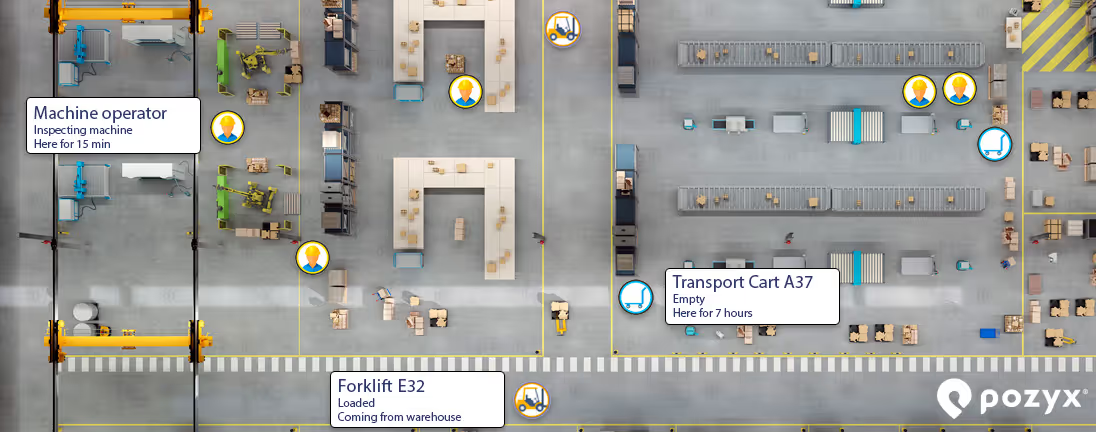
Der Pozyx Location Hub: aufgebaut auf dem Omlox-Hub-Standard
Der Pozyx Location Hub verfolgt den gegenteiligen Ansatz. Statt pro Ereignis abzurechnen, ist er für kontinuierliches und hochfrequentes industrielles Tracking optimiert und hält die Kosten dabei planbar. Er basiert auf einem vollständig konformen omlox Hub, der als einheitliches Rückgrat für alle Standortdaten über eine Anlage oder eine Multi-Site-Bereitstellung hinweg dient.
Was der omlox Hub ermöglicht
In der Pozyx-Implementierung bietet der omlox Hub ein standardisiertes und interoperables Modell für alle Tracking-Technologien. Er harmonisiert Positionen aus UWB-Location-Systemen, BLE-Beacons, GPS-Trackern, RFID-Systemen und vielen weiteren Quellen. Jeder Standortanbieter meldet an den omlox Hub, der diese Positionen in ein gemeinsames globales Koordinatensystem überführt. So können Enterprise-Systeme Standorte konsistent verarbeiten, ohne die Herkunft oder den Typ des Trackers kennen zu müssen.
Das Geofencing-Verhalten folgt dem omlox-Standard und wird durch Pozyx zusätzlich erweitert. Der Location Hub berücksichtigt die Standortzuverlässigkeit, wendet Toleranzzonen an und verhindert falsche Ein- oder Austrittsauslösungen bei verrauschten Signalen. Das Ergebnis ist ein stabiles Ereignisverhalten selbst in komplexen industriellen Umgebungen.
omlox HTTP API und MQTT: nahtlose Integration für Enterprise-Teams
Der Pozyx Location Hub stellt saubere und standardisierte Datenschnittstellen bereit:
- omlox HTTP API zum Abfragen von Positionen, Geofences, Trackables, Zonen und Metadaten
- MQTT-Feeds zum Streamen von Standort-Updates und Ereignissen in Echtzeit in interne Systeme
Diese beiden Schnittstellen machen den Pozyx Hub für interne Enterprise-Software-Teams äußerst zugänglich. Sie können den Hub in ihr WMS, ERP, MES, Digital Twin oder in individuelle Analyseanwendungen integrieren, ohne auf proprietäre SDKs oder teure Cloud-Event-Pipelines angewiesen zu sein.
Insbesondere MQTT ermöglicht das Streaming von Standort-Updates mit hoher Frequenz bei minimalem Overhead und ohne Bezahlung pro Ereignis.
Über den Omlox Hub hinausgehen
Datenanreicherung
Pozyx erweitert den Standard-omlox-Hub um ein reichhaltigeres Asset-Modell und automatisierte Datenanreicherung.
Trackable-Modelle ermöglichen es Unternehmen, konsistente Asset-Typen mit Metadatenfeldern zu definieren, die zu ihren Workflows passen. Die Datenanreicherung ergänzt Verweildauer, Bewegungsklassifizierung, semantische Standort- und Gebäudeerkennung sowie zusätzliche Kontextinformationen, die nachgelagerte Logik vereinfachen. Diese Erweiterungen machen die Plattform direkt für den operativen Einsatz nutzbar, ohne zusätzliche Datenverarbeitungsschichten zu schaffen.
Kartenverwaltung und Tile-Mapping-Service
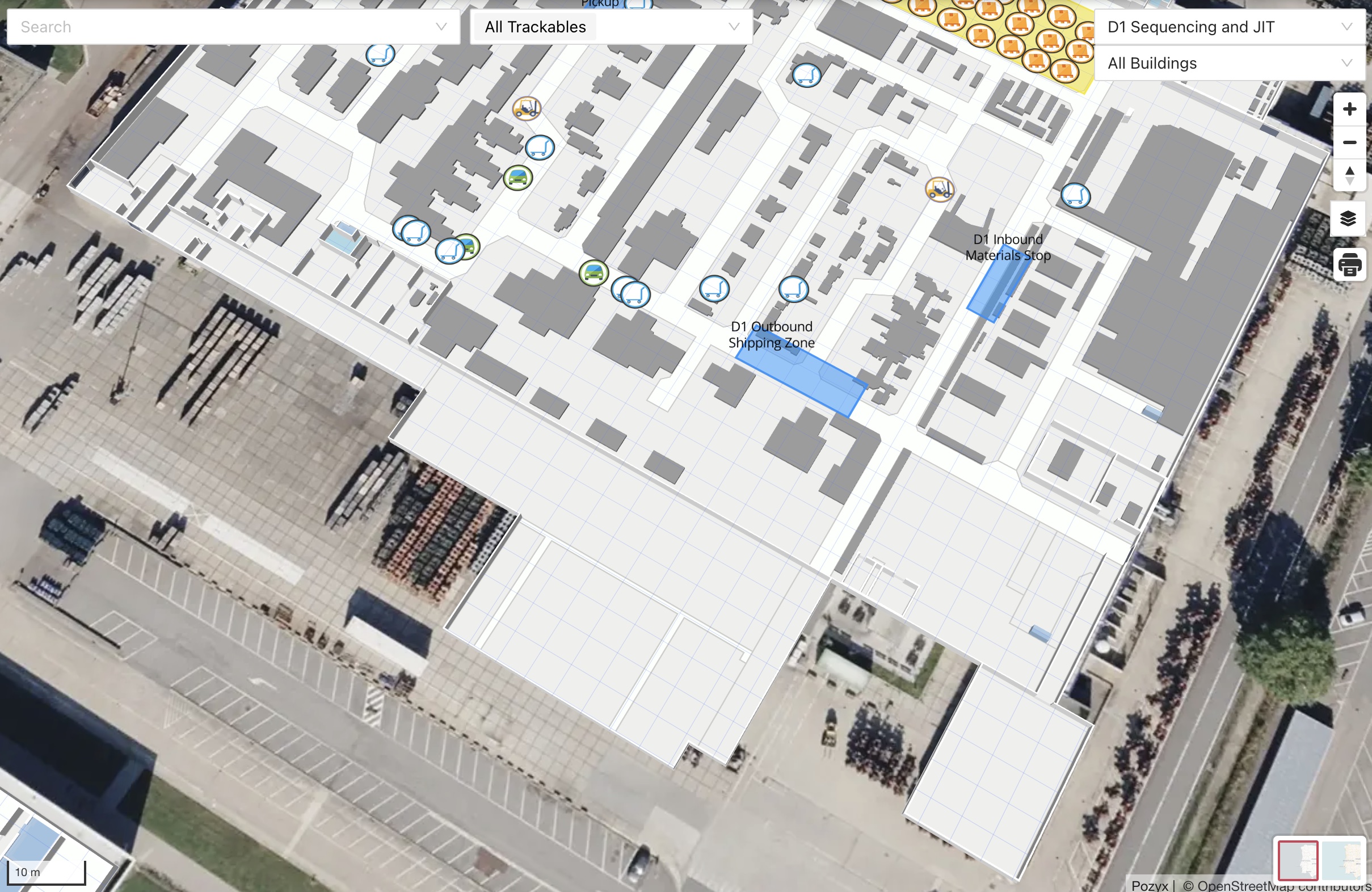
Ein zentraler Bestandteil des Pozyx Location Hub ist sein integrierter Tile-Mapping-Service. Pozyx hostet Indoor-Karten, Gebäudestrukturen und mehrstöckige Layouts und stellt sie als Vektorkacheln bereit. Das ermöglicht eine performante Darstellung sowohl innerhalb der Pozyx-Plattform als auch in Drittanbieteranwendungen, die konsistente und skalierbare Kartendaten benötigen.
Indoor- und Outdoor-Karten, Lagerlayouts und aus CAD abgeleitete Pläne werden so Teil einer einheitlichen Umgebung, was für industrielle Implementierungen, bei denen Kontext zählt, essenziell ist.
Security by Design: vergleichbar mit der Sicherheit von ALS
Der Pozyx Location Hub folgt modernen Sicherheitspraktiken, wie sie Unternehmen von AWS-Services erwarten. Dazu gehören sichere Authentifizierungsmechanismen, starke API-Zugriffskontrollen, verschlüsselte Kommunikation und isolierte Bereitstellungsoptionen.
Kunden können Pozyx betreiben in:
- einer sicheren, von Pozyx verwalteten Cloud-Umgebung
- einer selbst gehosteten Umgebung unter vollständiger unternehmensinterner Kontrolle
Diese Flexibilität erleichtert es sicherheitsbewussten Enterprise-Teams, Compliance-Anforderungen zu erfüllen, Audits durchzuführen und die volle Kontrolle über Daten und Infrastruktur zu behalten.
Ideal für interne Enterprise-Software-Teams
Viele Unternehmen möchten ihre eigenen Tools auf einer zuverlässigen Standortbasis aufbauen, statt an einen geschlossenen Cloud-Service gebunden zu sein, der pro Ereignis abrechnet.
Pozyx eignet sich besonders für Enterprise-Software-Teams, die:
- Standortdaten in ihre bestehenden Geschäftssysteme integrieren möchten
- individuelle Dashboards und operative Workflows entwickeln wollen
- Echtzeit-Standortdaten über MQTT ohne Kostenspitzen verarbeiten möchten
- mit einer standardisierten omlox-API statt mit proprietären Anbieterformaten arbeiten wollen
- die volle Kontrolle über Bereitstellung und Datenhoheit behalten möchten
- unvorhersehbare ereignisbasierte Cloud-Abrechnung vermeiden wollen
Pozyx wird so zu einem stabilen internen Service statt zu einem variablen Cloud-Kostenfaktor.
Planbare Kosten in großem Maßstab
Da Pozyx nicht pro Ereignis abrechnet, können Unternehmen ihre Tracking-Frequenz, die Anzahl der Assets oder die Anzahl der Geofences skalieren, ohne finanzielle Überraschungen zu erleben. Sicherheitsanwendungen, Kollisionsvermeidung und hochfrequente Workflows bleiben erschwinglich und planbar.
In realen Projekten erzielt Pozyx im Vergleich zu Amazon Location Service für ähnliche Workloads oft Kostensenkungen von zwei Größenordnungen.
Wo der Pozyx Location Hub innerhalb der größeren Pozyx-Plattform passt
Der Pozyx Location Hub ist das Herzstück der Pozyx Platform, ist jedoch Teil eines größeren Ökosystems, das auf Echtzeit-Positionierung aufbaut und zusätzlichen Mehrwert schafft. Die Plattform umfasst eine vollständige Analyseumgebung für historische Wege, Heatmaps und operative Einblicke und hilft Teams dabei, Bewegungsmuster zu verstehen und Prozesse zu optimieren.
Eine Automatisierungsebene bietet regelbasierte Workflows, die Alarme auslösen, sich in Unternehmenssysteme integrieren oder Routineabläufe auf Basis zuverlässiger Geofence- und Ereignissignale aus dem Location Hub vereinfachen können. Eine Mobile App unterstützt tägliche Aufgaben wie Scannen, Tagging und Navigation auf dem Gelände.
All dies läuft innerhalb eines unternehmensgerechten Verwaltungsrahmens für Benutzerrollen, Backups, Diagnosen und Integrationsmanagement. Dadurch wird der Location Hub zur Grundlage einer vollständigen industriellen Standortplattform, mit Analysen, Automatisierung und operativen Tools, die mit den Anforderungen mitwachsen.
Fazit
Amazon Location Service eignet sich für Outdoor-Tracking mit geringer Frequenz, doch sein Abrechnungsmodell wird für Echtzeitszenarien zu teuer. Sobald Geräte häufig melden oder Indoor-Geofences benötigen, steigen die Kosten schnell an.
Der Pozyx Location Hub bietet eine sichere, skalierbare und planbare Alternative, die auf dem omlox-Standard basiert. Er liefert einheitliches Indoor- und Outdoor-Tracking, zuverlässiges Geofencing, globale Koordinatenverwaltung, einen leistungsstarken Tile-Mapping-Service sowie Integration über omlox HTTP APIs und MQTT-Streams. Erweiterungen wie Trackable-Modelle und Datenanreicherung machen ihn für den realen industriellen Einsatz praktisch.
Für interne Enterprise-Software-Teams, die eine kosteneffiziente und entwicklerfreundliche Grundlage für den Aufbau eigener Anwendungen suchen, bietet Pozyx eine leistungsstarke und zukunftssichere Lösung zu einem Bruchteil der Kosten von ALS.
Wenn Sie loslegen möchten, kontaktieren Sie uns für ein Kit oder einen Test, API-Dokumentation und weitere Informationen:
Verfasst von
Samuel Van de Velde

CTO & Mitgründer bei Pozyx
Samuel ist Elektroingenieur mit großem Interesse an Ortungstechnologie. Er verfügt über Erfahrung in Unternehmertum, öffentlichem Reden, Produktmanagement, dem Internet der Dinge (IoT) und Machine Learning. Nach seinem Abschluss im Jahr 2010 trat er dem Department of Telecommunications and Digital Information Processing (TELIN) bei, um dort einen Ph.D. zum Thema kollaborative Indoor-Ortung zu verfolgen. 2015 gründete er aus dieser Forschung heraus das Spin-off-Unternehmen Pozyx.