
5 innovaties in GPS asset tracking in 2026

Bijgewerkt ten opzichte van onze editie van 2023
GPS asset tracking is de voorbije jaren snel geëvolueerd. Toen we onze vorige update in 2023 publiceerden, verschoof de markt al richting slimmere en sterker verbonden oplossingen.
Toen lag de focus vooral op een hogere GPS-nauwkeurigheid, langere batterijduur en betere connectiviteit. Die innovaties vormden de basis voor moderne asset tracking-systemen.
In 2026 draait GPS asset tracking niet langer alleen om het volgen van voertuigen of containers. Het is uitgegroeid tot een gelaagde, datagedreven zichtbaarheidsarchitectuur die GPS, BLE, energiezuinige cellulaire IoT en uiterst nauwkeurige positionering combineert.
Dit zijn de vijf innovaties die GPS asset tracking vandaag herdefiniëren.
1. Wegwerpbare GPS-labels op basis van energiezuinige cellulaire IoT
Energiezuinige cellulaire technologieën zoals LTE-M en NB-IoT zijn wereldwijd volwassen geworden. De dekking is breder, roaming is stabieler en IoT-abonnementen zijn geoptimaliseerd voor trackingdevices met lage bandbreedte.
Die maturiteit maakt een belangrijke doorbraak mogelijk in GPS asset tracking: wegwerpbare GPS-verzendlabels.
In plaats van één herbruikbare GPS-tracker op een voertuig te plaatsen, kunnen bedrijven vandaag één goedkope GPS-label per pallet of zending inzetten. Deze ultradunne devices werken wekenlang dankzij geoptimaliseerde rapporteringsintervallen en energie-efficiënte cellulaire communicatie. Door ultra-low-power chipsets, diepe slaapmodi tussen transmissies en compacte lithium- of papiergebaseerde batterijen volstaat een kleine geïntegreerde batterij voor de volledige levenscyclus van een zending. De batterij is bewust afgestemd op eenmalig of kortstondig gebruik, waardoor terughalen of opladen na levering niet nodig is.
| Kenmerk | Traditionele GPS-tracking | Moderne tracking op zendingniveau |
|---|---|---|
Uitrol van trackers | Eén tracker per truck | Eén tracker per pallet |
Zichtbaarheid van zendingen | Gedeelde zichtbaarheid voor meerdere zendingen | Onafhankelijke tracking per zending |
Duur van de tracking | Tracking stopt zodra het voertuig vertrekt | Zichtbaarheid blijft behouden na levering |
Deze innovatie is bijzonder relevant in bouw, maakindustrie en logistiek met hoge waarde, waar de exacte locatie van een specifieke pallet kostbare zoektijd en discussies kan vermijden.
Van fleet tracking naar shipment tracking: GPS is veel dichter bij het asset zelf gekomen.
2. Automatische leveringsbevestiging met GPS en BLE-scanning
Een van de belangrijkste innovaties in moderne GPS shipment tracking is de integratie van BLE-scanning rechtstreeks in GPS-devices.
Traditioneel kon een GPS-tracker alleen zijn eigen locatie doorsturen. Vandaag kunnen veel GPS-trackers ook scannen op nabijgelegen Bluetooth Low Energy-tags en die aanwezigheidsdata via energiezuinige cellulaire netwerken doorgeven.
Daardoor verandert de rol van GPS in logistiek fundamenteel.
In plaats van alleen de vraag “Waar is het voertuig?” te beantwoorden, kunnen GPS shipment tracking-systemen nu ook aangeven:
- Welke pallets zich momenteel in de truck bevinden
- Wanneer specifieke goederen zijn geladen
- Wanneer specifieke goederen zijn gelost
- Waar een leveringsmoment exact heeft plaatsgevonden
Door GPS-positionering te combineren met BLE-scanning kunnen bedrijven de leveringsbevestiging automatiseren. Wanneer een pallet met BLE-label niet langer wordt gedetecteerd op een specifieke GPS-coördinaat, kan het systeem automatisch bevestigen dat de lossing heeft plaatsgevonden.
Deze innovatie versterkt pallet tracking aanzienlijk in transportomgevingen. In plaats van uitsluitend te vertrouwen op manuele barcodescans of bevestiging door de chauffeur, worden leveringsmomenten datagedreven en voorzien van een tijdstempel.
3. Batterijgevoede GPS + BLE als flexibele infrastructuur
Een andere grote evolutie is batterij-efficiëntie.
Dankzij energiezuinige cellulaire communicatie en geoptimaliseerde scanintervallen kunnen GPS-trackers met BLE-scanning langdurig werken op interne batterijen. De batterijduur hangt af van de configuratie, maar met aangepaste GPS-fixfrequenties en BLE-scanrates kunnen devices jarenlang operationeel blijven.
Dat maakt een nieuw uitrolmodel mogelijk.
Batterijgevoede GPS + BLE-scanners kunnen worden geplaatst:
- Aan ingangen van yards
- Op afgelegen bouwplaatsen
- In cross-dockingzones
- In tijdelijke logistieke hubs
Zonder bekabelde gateways of permanente installatie.
In de praktijk kunnen batterijgevoede GPS-scanners functioneren als flexibele, autonome detectiepunten. Zo breidt BLE asset tracking zich uit van voertuigen naar semi-vaste infrastructuur, waardoor implementaties sneller en flexibeler worden.
De batterijprestaties hangen sterk af van rapporteringsintervallen, scanfrequentie en omgevingsfactoren. Tools zoals de Pozyx battery life calculator helpen om de verwachte levensduur voor GPS-, BLE- en hybride configuraties in te schatten op basis van realistische parameters:
De combinatie van GPS-positionering, BLE-scanning en lange batterijduur maakt van GPS shipment tracking een intelligent systeem voor eventdetectie in plaats van louter bewegingsmonitoring.
Ontdek het Pozyx Platform
Het Pozyx platform brengt positioneringsgegevens samen om volledige zichtbaarheid te geven aan logistiek en productie.
Pozyx Platform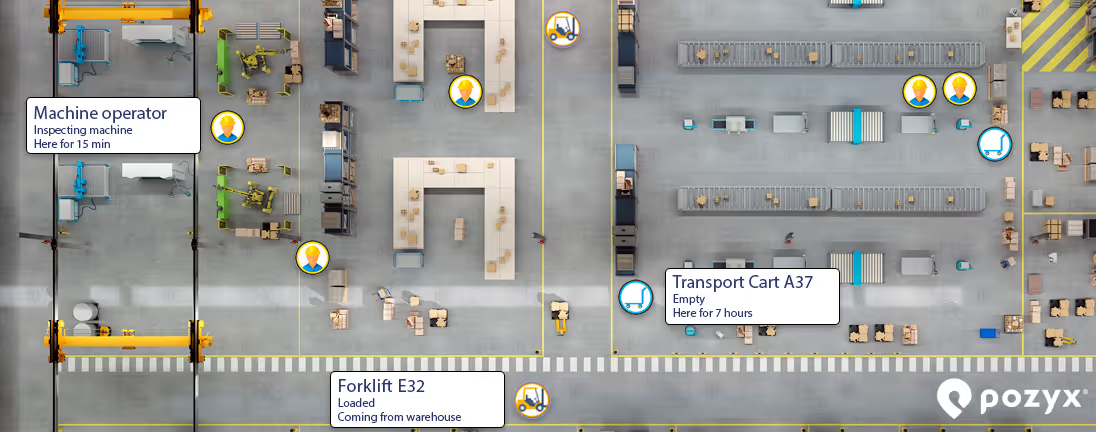
4. Printbare BLE smart labels als schaalbare identificatielaag
Als GPS met BLE-scanning automatische palletherkenning mogelijk maakt, is de volgende vraag: wat maakt tagging op grote schaal economisch haalbaar?
Het antwoord is: goedkope, printbare BLE smart labels.
Moderne BLE asset tracking-oplossingen gebruiken uiterst betaalbare printbare labels die rechtstreeks op pallets, kratten of individuele zendingen kunnen worden bevestigd. Deze labels bieden unieke identificatie en kunnen maandenlang werken op kleine geïntegreerde batterijen.
Hier evolueert pallet tracking van concept naar schaalbare praktijktoepassing.
GPS shipment tracking levert locatie.
BLE-scanning levert detectie.
Printbare BLE-labels leveren identiteit op schaal.
Omdat deze labels kostenefficiënt zijn, kunnen bedrijven ze inzetten voor:
- Elke pallet die de productie verlaat
- Tijdelijke zendingen
- One-way logistieke stromen
- Herbruikbare containers
In combinatie met GPS + BLE-scanning ontstaat zo echte zichtbaarheid op zendingniveau.
In plaats van één voertuig te volgen dat 30 pallets vervoert, kunnen bedrijven 30 afzonderlijke assets binnen dat voertuig volgen. Die fijnmazige zichtbaarheid verkort zoektijden, verhoogt de laadnauwkeurigheid en maakt leveringsverificatie betrouwbaarder.
Hieronder ziet u een video die toont hoe deze printbare smart labels in de praktijk werken:
Belangrijk: printbare BLE-labels staan niet los van GPS asset tracking. Ze vormen net de identificatielaag die GPS shipment tracking op palletniveau mogelijk maakt.
Die gelaagde architectuur bepaalt hoe moderne GPS asset tracking er in 2026 uitziet.
5. Hybride positionering voor indoor en outdoor asset tracking
GPS werkt uitstekend in outdoor omgevingen, maar industriële operaties reiken verder dan open lucht.
Magazijnen, productiesites, yards en bouwomgevingen brengen positioneringsuitdagingen met zich mee die pure GPS niet kan oplossen.
Daarom steunen moderne asset tracking-systemen op hybride positionering, waarin het volgende wordt gecombineerd:
- GNSS voor outdoor tracking
- Wi-Fi en BLE voor overgangszones binnenshuis
- Ultra-Wideband voor precisie op centimeterniveau in yards en magazijnen
Deze hybride architectuur zorgt voor continue tracking over de volledige logistieke keten. Assets kunnen worden gevolgd van indoor productiezones naar outdoor opslag, van yard naar transport en van transport naar de leveringssite, zonder zichtbaarheid te verliezen.
Nog belangrijker: hybride positionering tilt GPS asset tracking van eenvoudige bewegingsregistratie naar operationele intelligentie.
Wanneer indoor precisie wordt gecombineerd met pallet tracking en GPS shipment tracking, ontstaat een continue digitale draad over:
- Productie
- Yardoperaties
- Transport
- Levering
Zoektijd daalt omdat assets niet alleen zichtbaar zijn, maar ook exact gelokaliseerd.
Laadnauwkeurigheid stijgt omdat goederen worden gedetecteerd in plaats van manueel bevestigd.
Discussies over leveringen nemen af omdat gebeurtenissen automatisch worden geregistreerd en verifieerbaar zijn.
De echte innovatie zit niet in één enkele positioneringstechnologie, maar in de integratie van GPS, BLE asset tracking, energiezuinige cellulaire IoT en uiterst nauwkeurige indoor positionering tot één samenhangende zichtbaarheidsarchitectuur.
Bij Pozyx hebben we sterk geïnvesteerd in de verdere ontwikkeling van dit hybride positioneringsmodel in echte industriële omgevingen. Door UWB-precisie te combineren met GPS- en BLE-technologie in praktische deployments, hebben we mee vormgegeven hoe naadloze indoor-outdoor asset tracking over de volledige levenscyclus van assets hoort te werken.
Hybride positionering is niet langer een extra laag boven op GPS-tracking. Het is de basis die moderne pallet tracking en end-to-end asset intelligence in 2026 mogelijk maakt.
De toekomst van GPS asset tracking
De innovaties van 2023 verbeterden devices.
De innovaties van 2026 herdefiniëren volledige systemen.
Energiezuinige cellulaire IoT maakte wegwerpbare GPS-labels mogelijk.
BLE-tracking maakte zichtbaarheid op zendingniveau schaalbaar.
Hybride positionering loste de uitdaging van indoor precisie op.
Samen herdefiniëren deze technologieën wat GPS asset tracking vandaag betekent.
Het gaat niet langer alleen om weten waar een truck zich bevindt. Het gaat om weten waar elk asset is, wat er geladen is, wat er geleverd werd en hoe operaties continu kunnen verbeteren.
Bedrijven die inzetten op gelaagde zichtbaarheidsarchitecturen creëren een meetbaar voordeel in operationele controle en klanttransparantie.
Klaar om verder te gaan dan basistracking? Ontdek hoe een gelaagde strategie met GPS, BLE en hybride positionering uw pallet tracking en zichtbaarheid over zendingen end-to-end kan versterken.
Geschreven door
Samuel Van de Velde

CTO en medeoprichter van Pozyx
Samuel is Burgerlijk ingenieur met een sterke interesse in locatietechnologie. Bekwaam in ondernemerschap, publiek spreken, productbeheer, internet der dingen (IoT) en machine learning. Na zijn afstuderen aan de UGent in 2010 ging hij aan de slag bij de afdeling Telecommunicatie en Digitale Informatieverwerking (TELIN) om een doctoraat te behalen op het gebied van collaboratieve localisatie binnenshuis. In 2015 richtte hij op basis van dat onderzoek het spin-offbedrijf Pozyx op.