L’état de l’UWB en 2025

La technologie UWB (ultra-wideband) existe depuis de nombreuses années, mais jusqu’à il y a seulement quelques années, elle restait une technologie de niche, adoptée par un petit nombre d’entreprises pionnières. Les récentes données de croissance du marché montrent une forte hausse du succès de l’UWB, désormais intégrée dans des produits grand public comme les smartphones, les montres connectées et les objets pour la maison intelligente, ainsi que dans l’automobile et les systèmes de localisation en temps réel (RTLS) industriels.
Aujourd’hui, l’ultra-wideband (UWB) est à un point de bascule vers une adoption massive dans de nombreux secteurs. D’ici 2025-2026, nous nous attendons à ce que l’UWB dépasse ses cas d’usage actuels dans les smartphones, l’automobile et les RTLS pour entrer dans des applications plus avancées, à haute précision, avec une adoption mondiale accrue.
L’UWB a été reconnue et saluée pour ses capacités techniques et ses avantages. Cependant, cela ne garantit pas à lui seul l’adoption à grande échelle d’une technologie. Dans cet article, nous abordons les différents aspects non techniques qui constituent la base du succès commercial de cette technologie.
Dans cet aperçu, nous couvrirons :
1. Principales applications de la technologie ultra-wideband
Ci-dessous, nous listons les trois principales applications de l’UWB en 2025.
L’UWB dans les produits grand public

De loin, l’adoption la plus importante de l’UWB a été observée dans les produits grand public, principalement sur le marché des smartphones. En 2024, environ 60 % de toutes les puces UWB expédiées étaient intégrées dans un smartphone. Apple est clairement en tête et a ajouté des capacités UWB à de nombreux produits grand public de son écosystème afin de prendre en charge la « conscience spatiale » de ses appareils. D’autres grands fabricants de smartphones comme Samsung et Xiaomi ont toutefois suivi le mouvement en adoptant l’UWB dans leurs modèles phares.
À la base de cela se trouve le FiRa Consortium (Fine Ranging), qui se consacre à transformer notre manière d’interagir avec notre environnement en permettant une connaissance précise de la localisation des personnes et des appareils. Le consortium FiRa a développé une norme qui décrit un ensemble commun de protocoles permettant des applications telles que le contrôle d’accès physique, la maison intelligente, la navigation intérieure, la distanciation sociale ou le suivi d’actifs.
En 2024, nous avons vu de nombreux nouveaux chipsets prendre en charge et être certifiés pour FiRa v2.0, ce qui permet beaucoup plus de cas d’usage qu’avec la version 1.0. On s’attend donc à voir arriver sur le marché un large éventail de nouveaux produits grand public tirant parti de ces nouvelles puces disponibles. En particulier sur le marché des serrures connectées, nous prévoyons l’arrivée de nouveaux produits exploitant la précision et la sécurité de l’UWB, offrant ainsi une meilleure expérience d’utilisation de ces systèmes avec votre smartphone.
L’UWB dans les RTLS industriels
En raison même des capacités de mesure de distance précises de l’UWB, cette technologie s’est imposée comme une évidence pour les systèmes de localisation en temps réel. Avec l’UWB, les systèmes RTLS peuvent fournir un positionnement en temps réel avec une précision de 10 à 30 cm, même dans les environnements les plus difficiles. Le RTLS UWB est principalement utilisé dans les secteurs minier, manufacturier et de la distribution, mais aussi dans la santé, l’agriculture, le commerce de détail ou même le sport.
Avant que l’UWB ne devienne une technologie grand public grâce à l’adoption par les smartphones, le RTLS UWB était le principal moteur d’usage de cette technologie. Cependant, l’adoption de la technologie dans les RTLS a été beaucoup plus lente que dans les produits grand public, qui évoluent rapidement. L’adoption dans un contexte industriel tend à être lente et progressive. Toutefois, l’époque où l’UWB devait encore prouver qu’elle était une technologie fiable dans des environnements difficiles est révolue. Aujourd’hui, le RTLS UWB est considéré comme la référence en matière de positionnement intérieur précis.
À peu près au même moment où FiRa a démarré en 2019, une autre norme est apparue : la norme Omlox. Cette norme visait spécifiquement les applications RTLS industrielles afin d’assurer l’interopérabilité entre les fournisseurs de systèmes RTLS, ainsi qu’entre les applications logicielles RTLS. Bien que la version initiale de la norme n’ait jamais été commercialisée, la dernière version d’Omlox (publiée en 2023) ouvre désormais lentement la voie à une adoption plus large de la norme.
L’UWB dans l’automobile
L’automobile est un autre domaine d’application (en plein essor) pour l’UWB, où la technologie est intégrée aux véhicules pour prendre en charge diverses fonctionnalités. De grands constructeurs tels que BMW, Mercedes, Volkswagen, GM et Tesla ont déjà lancé des véhicules équipés d’UWB, ou y travaillent activement. En 2024, environ 6 % des voitures expédiées étaient dites compatibles UWB. Un pourcentage qui devrait atteindre 40 % d’ici 20230.
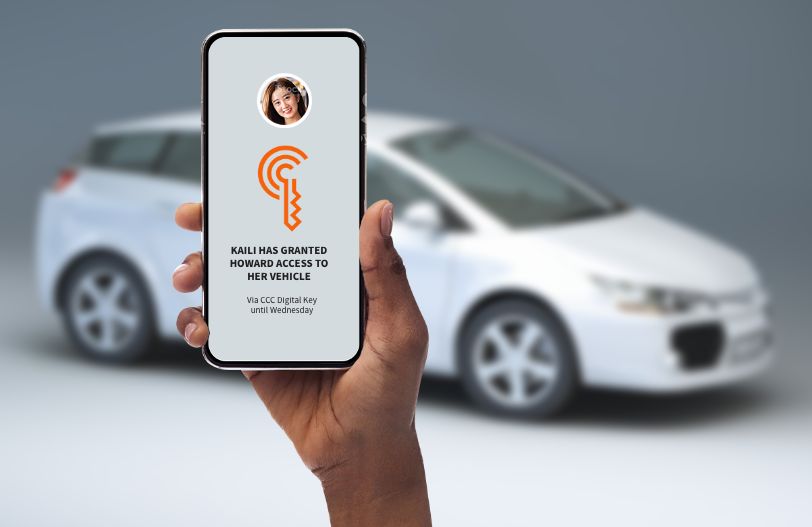
La fonctionnalité de « smart entry », qui verrouille et déverrouille intelligemment un véhicule en fonction de la localisation de la clé de voiture, est un moteur majeur de cette technologie. Cependant, la future réglementation sur la détection de présence d’enfant (CPD) pourrait devenir un moteur encore plus important pour la technologie UWB. Pour prendre en charge cette capacité, la simple mesure de distance UWB ne suffira pas et il faudra s’appuyer sur les capacités radar de l’UWB, pour lesquelles une série de nouvelles puces sera mise sur le marché.
L’adoption repose là encore sur une norme internationale. Plus précisément, le Car Connectivity Consortium (CCC), qui a standardisé les protocoles UWB à utiliser pour assurer l’interopérabilité entre les clés de voiture de différents constructeurs automobiles. En 2024, NXP Semiconductors et BMW Group ont été annoncés comme les premières entreprises à recevoir les certifications d’interopérabilité et de sécurité CCC pour la clé numérique, d’autres devant suivre.
Restez informé !
Restez à jour avec les dernières actualités de Pozyx et de l'industrie sur le suivi de localisation en temps réel. Ne manquez rien ! Pas de spam, promis.
Oui, inscrivez-moi
2. Interopérabilité des puces UWB
Norme IEEE
Les applications sans fil prospèrent au mieux dans le cadre de normes industrielles. Les normes offrent la liberté d’acheter auprès d’un plus grand nombre de fournisseurs, des prix compétitifs, une technologie commune qui facilite les choix de conception et les besoins en stock, et surtout, elles permettent à des appareils ou puces de différents fournisseurs d’interopérer, créant ainsi une solution véritablement pérenne.
Les avantages des normes de communication sont essentiels pour les grandes entreprises technologiques et d’électronique grand public afin de garantir les coûts les plus bas et la continuité d’approvisionnement, évitant ainsi le piège du fournisseur unique. Cet aspect de « tranquillité d’esprit » est le principal atout des normes, ce qui en fait de fervents soutiens pour les grandes entreprises. En outre, une norme repose généralement sur une expérience collective et une coopération qui renforcent la fiabilité et la disponibilité à long terme. Une bonne norme crée également un écosystème de plusieurs fournisseurs, en concurrence sur la qualité et le prix, contribuant tous à renforcer encore l’adoption de l’UWB et sa pérennité.
Les versions de la norme IEEE 802.15.4 ont influencé l’UWB
L’IEEE a reconnu la nécessité de standardiser la technologie UWB pour une utilisation dans les réseaux personnels (PAN). Elle a établi la norme IEEE 802.15.4a, publiée en 2007, première norme à inclure l’UWB et à définir à la fois la couche MAC (liaison) et la couche PHY (physique) dans le modèle OSI (qui définit les 7 couches de l’architecture réseau). Ces ajouts ont introduit de nouvelles fonctionnalités qui manquaient à la norme 802.15.4 précédente pour prendre en charge l’UWB : un débit de données plus élevé et une mesure de distance précise. Les versions suivantes, IEEE 802.15.4-2011 et IEEE802.15.4-2015, ont été publiées pour permettre la rétrocompatibilité et introduire les PHY UWB LRP et HRP (low rate pulse et high rate pulse). Cette version est encore utilisée aujourd’hui dans de nombreux appareils UWB disponibles sur le marché.
En août 2020, la norme IEEE 802.15.4z a été publiée, avec un accent sur des capacités de mesure de distance améliorées, une sécurité renforcée et une meilleure consommation d’énergie, autant de caractéristiques nécessaires pour améliorer et optimiser davantage les solutions UWB. La prochaine publication attendue est prévue pour 2025 avec la version IEEE 802.15.4ab. Elle prendra en charge de nouveaux ensembles de règles pour élargir les cas d’usage, de nouvelles fonctionnalités pour les smartphones telles que le streaming audio, une sécurité accrue grâce à des paquets plus petits et une consommation d’énergie nettement réduite.
En conclusion, la norme IEEE ne se contente pas de créer de la stabilité et de l’interopérabilité ; elle fait aussi progresser l’ensemble des fonctionnalités UWB, ce qui se traduit par des avantages dont les appareils UWB et leurs applications peuvent tirer parti.
3. Réglementation de l’ultra-wideband
Les définitions claires de la norme IEE802.15.4 spécifient trois bandes de fréquences, soit 16 canaux radio au total. La réglementation a suivi, et les autorités réglementaires régionales de chaque pays définissent lesquels de ces canaux peuvent ou non être utilisés géographiquement, ce qui aboutit à des règles UWB bien définies. La nouvelle génération de chipsets UWB permet de couvrir de nouvelles régions, comme le Japon, avec la même technologie. Pour les applications grand public, les canaux UWB 5 (à 6 GHz) et 9 (à 8 GHz) ont été sélectionnés par FiRa comme principaux canaux UWB à utiliser, car ils permettent une utilisation mondiale.
Les applications RTLS UWB ont encore tendance à utiliser les canaux de fréquence plus basse, car ils offrent la portée la plus élevée possible avec la technologie UWB, ce qui a un impact direct sur la quantité d’infrastructure nécessaire pour une installation RTLS. Cependant, les futurs systèmes adopteront probablement aussi le canal UWB 9 pour être utilisés dans certaines zones géographiques comme le Japon et la Chine. En outre, le canal UWB 5 est de plus en plus remis en question depuis que le Wi-Fi a été autorisé à utiliser la même bande de fréquences, ce qui entraîne des interférences avec tout système UWB. Actuellement, le Wi-Fi à 6 GHz (introduit avec le Wi-Fi 6E) reste encore limité dans son adoption, mais devrait se développer dans les années à venir.
Évolutions récentes de la réglementation UWB
En 2024, l’Union européenne a mis à jour la réglementation UWB afin d’améliorer l’adoption et les performances de la technologie. La décision d’exécution (UE) 2024/1467, adoptée le 27 mai, a modifié les règles précédentes pour harmoniser l’utilisation du spectre dans l’Union. Les principaux changements comprenaient une augmentation de 10 dB de la puissance d’émission UWB en intérieur, de -41,3 dBm/Hz à -31,3 dBm/Hz, élargissant la portée opérationnelle. La mise à jour a également autorisé certaines applications extérieures, telles que le suivi de localisation et l’usage véhiculaire, au bénéfice des systèmes de localisation en temps réel (RTLS) dans les secteurs nécessitant une portée étendue et des fonctionnalités en extérieur. Ce changement constitue une avancée majeure pour l’UWB dans l’UE, et des discussions similaires sont en cours aux États-Unis, bien qu’aucune décision claire n’ait encore été prise.
La Chine a également introduit des changements importants dans sa réglementation UWB. Le 29 avril 2024, le ministère de l’Industrie et des Technologies de l’information (MIIT) a publié les « Dispositions provisoires sur la gestion radio des équipements de transmission radio ultra-large bande (UWB) » (MIIT n° 77 [2024]), qui entreront en vigueur le 1er août 2025, remplaçant les directives de 2008. Les nouvelles règles définissent les équipements UWB comme ayant une bande passante d’émission d’au moins 500 MHz, fonctionnant dans la plage 7163-8812 MHz, interdisant de fait les canaux de fréquence plus basse et poussant la plupart des systèmes à utiliser le canal UWB 9.
Évolutions à venir de la réglementation UWB
Comme indiqué, des discussions sont en cours pour moderniser également la réglementation UWB aux États-Unis. En outre, 2027 sera une année charnière pour l’UWB avec la Conférence mondiale des radiocommunications (CMR). Étant donné que les décisions prises à la CMR ont un impact sur les communications sans fil dans le monde entier, cette conférence est un événement crucial pour façonner les futures politiques en matière de spectre, influençant des technologies comme la 5G, le haut débit par satellite et les applications ultra-wideband (UWB). La question de l’utilisation par la 5G du spectre en bande haute sera discutée et présente un intérêt particulier pour l’UWB, car elle pourrait avoir un impact direct sur les canaux UWB supérieurs.
Des initiatives comme l’UWB Alliance contribuent à soutenir l’adoption de l’UWB en exprimant activement les préoccupations et recommandations de toutes les parties prenantes de l’UWB auprès des régulateurs de différents pays.
4. Écosystème des puces UWB
Alors que la standardisation arrivait à maturité pour garantir des solutions pérennes, c’est Decawave (aujourd’hui Qorvo) qui a lancé la première puce radio UWB commerciale en 2013 pour prendre en charge la version IEEE 802.15.4 - 2015, encore largement utilisée dans les applications RTLS et IoT.
La plus récente norme IEEE 802.15.4z, optimisée pour les applications grand public et publiée fin 2020, est aujourd’hui prise en charge par plusieurs fournisseurs de semi-conducteurs : Qorvo, NXP, Apple, qui produit ses propres puces UWB U1 et U2 (le « U » signifie UWB), ST Micro, Qualcomm et imec ont tous beaucoup investi dans le développement de puces UWB. En 2024, plusieurs fournisseurs chinois de semi-conducteurs ont également lancé des puces UWB, offrant ainsi un large choix de fournisseurs de puces UWB.
En 2024, près de 450 millions de puces UWB ont été expédiées, soit une hausse de 21 % sur un an, selon les estimations de TechnoSystemsResearch. Outre l’expansion des smartphones, des balises grand public et des clés numériques automobiles, la croissance du marché en 2024 a été stimulée par d’autres facteurs.
L’UWB est sur le point de devenir la prochaine technologie de composant essentielle, comme l’ont été le GPS, le Wi-Fi et le Bluetooth avant elle. Déjà expédiée dans des millions de smartphones et de voitures, et dans plus de 40 autres secteurs, l’UWB permet des services de localisation intérieure précis, des communications sécurisées, des interfaces utilisateur contextuelles et des analyses avancées, ce qui la rend idéalement adaptée aux applications de l’Industrie 4.0.
Eric Creviston, Président de Qorvo
Il est clair que le paysage des puces UWB disponibles à des fins commerciales s’élargit rapidement. Chacun des fournisseurs a développé des puces radio prenant en charge des versions spécifiques de la norme IEEE 802.15.4 et les différentes alliances de standardisation (applications) opérant sur différents canaux de communication. Les cycles de développement successifs des chipsets se traduisent par une consommation d’énergie plus faible, un format plus compact et la prise en charge d’une gamme plus large de fonctionnalités.
Les technologies ne deviennent jamais un succès mondial lorsqu’elles reposent sur une offre exclusive. L’adoption par l’industrie est alimentée par la diversité des offres de semi-conducteurs disponibles, permettant la concurrence (sur les spécifications et les fonctionnalités) afin d’éviter le très redouté verrouillage fournisseur et de permettre une interopérabilité future entre différents appareils UWB. Et bien sûr, à mesure que la production de puces UWB continue d’augmenter au fil du temps, elle laisse entrevoir une baisse des prix.
5. Standardisation des applications ultra-wideband
Plusieurs normes ont été définies pour la communication UWB. Outre la norme technique IEEE 802.15.4, plusieurs organismes de normalisation, chacun avec son propre champ d’action, son périmètre commercial et ses objectifs, œuvrent à apporter une standardisation à l’UWB. Les technologies ne perdurent que lorsqu’elles s’appuient sur une infrastructure robuste et axée sur la qualité, permettant une expansion rapide, avec un environnement réglementaire et de gestion du spectre favorable pour sécuriser et maximiser la croissance de l’UWB.
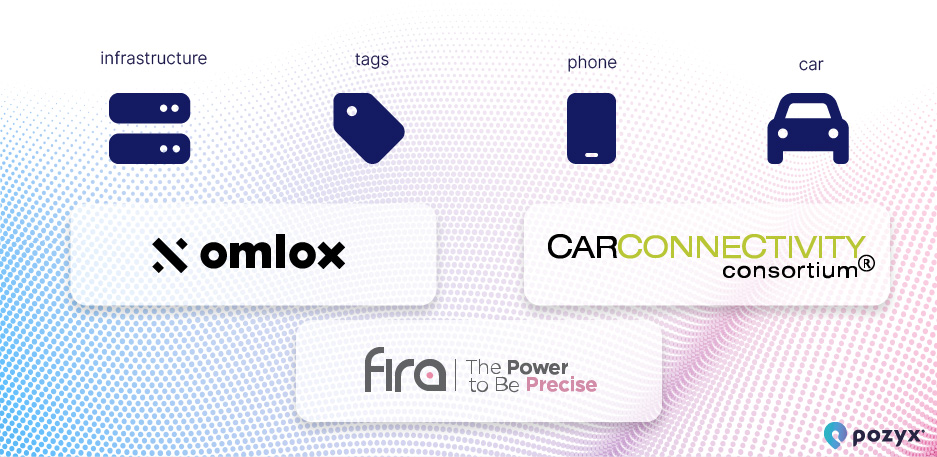
FiRa Consortium
Le FiRa Consortium s’est d’abord concentré sur les applications pair à pair entre smartphones et divers appareils (grand public). À ce jour, le FiRa Consortium compte plus de 100 membres dans différentes catégories. Parmi les membres fondateurs figuraient ASSA ABLOY Group (HID Global), NXP Semiconductors, Samsung Electronics et Apple.
Début janvier 2025, FiRa a publié sa dernière spécification v3.0, environ un an après la version précédente 2.0. La nouvelle Core v3.0 améliore l’efficacité et la polyvalence de ses systèmes UWB, ce qui permettrait à plusieurs cas d’usage (comme le suivi et l’accès sans clé) de fonctionner plus efficacement en même temps. Cette nouvelle version ajoute également la fonctionnalité CCC Digital Key UWB pour une meilleure interopérabilité avec la norme CCC.
En 2024, plusieurs nouvelles puces radio UWB ont obtenu la certification FiRa v2.0, notamment des puces de NXP, Qualcomm, GiantSemi, Chipsbank, Maxscend et NewRadioTech.
Omlox Consortium
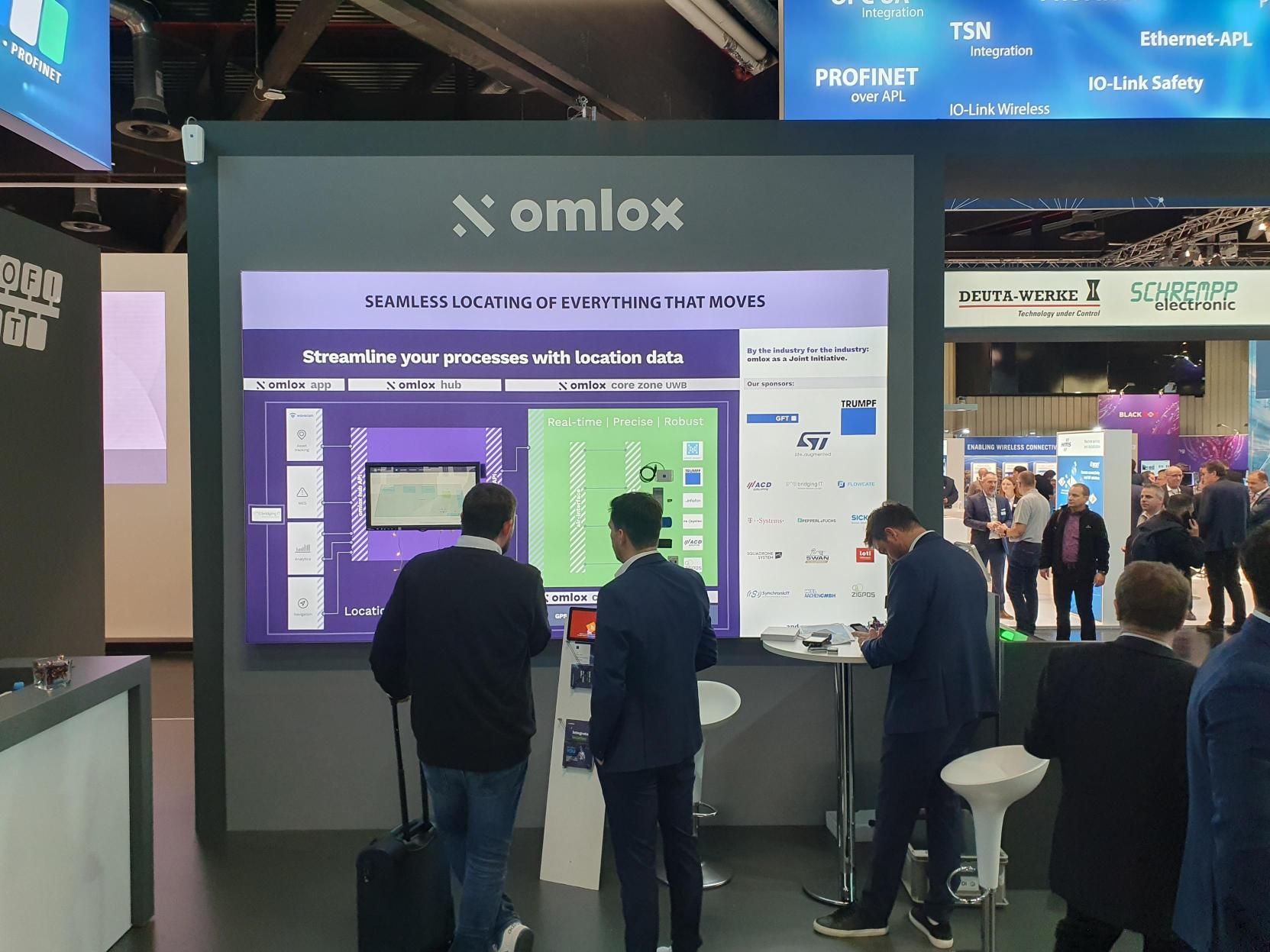
Omlox est une norme ouverte pour les systèmes de localisation en temps réel (RTLS). La norme Omlox est gérée par l’organisation PI, qui a également géré des normes industrielles populaires telles que Profibus, Profinet et IO-Link. À ce jour, la norme Omlox rassemble plus de 60 partenaires et membres, dont Qorvo, STMicroelectronics, Amazon AWS, Siemens et Pozyx. Plus de 300 cas d’usage professionnels ont été définis, principalement dans la production, la logistique, l’industrie des procédés, la santé et le commerce de détail.
Le consortium Omlox a développé deux normes :
- Omlox Core zone : une norme pour les systèmes de localisation UWB définissant la manière dont les balises et l’infrastructure communiquent afin de permettre l’interopérabilité entre les balises RTLS et les ancres de différents fournisseurs.
- Omlox hub : une interface standardisée pour récupérer des informations de localisation à partir d’un large éventail de techniques de localisation, telles que l’UWB, la RFID, la 5G, le BLE, le Wi-Fi et le GPS.
Les deux normes sont actuellement en version 2.0, publiée en 2023. Début 2025, Omlox finalisera son programme officiel de certification pour la core zone et le hub.
Car Connectivity Consortium
Le Car Connectivity Consortium, également CCC, a pour mission de rapprocher les industries automobile et technologique grand public afin de pérenniser l’accès aux véhicules à l’aide d’appareils intelligents. Le consortium compte plus de 300 entreprises membres collaborant au développement de normes et de solutions mondiales pour les appareils intelligents et la connectivité embarquée, tout en réduisant la fragmentation du marché de nos technologies. Parmi les membres notables figurent Apple, Google, NXP, ainsi qu’un grand nombre de grands constructeurs automobiles.
Le CCC utilise diverses technologies telles que le BLE, l’UWB et le NFC afin de fournir des solutions fiables. La dernière version Car Key 3 v1.1 a été publiée en 2022. Depuis, plusieurs plug-fests ont été organisés pour réunir différents constructeurs automobiles et fabricants de smartphones afin de tester et démontrer l’utilisation et l’interopérabilité des clés basées sur l’UWB. En décembre 2023, le CCC a lancé son programme de certification, NXP et BMW étant les premiers à obtenir cette certification en 2024.
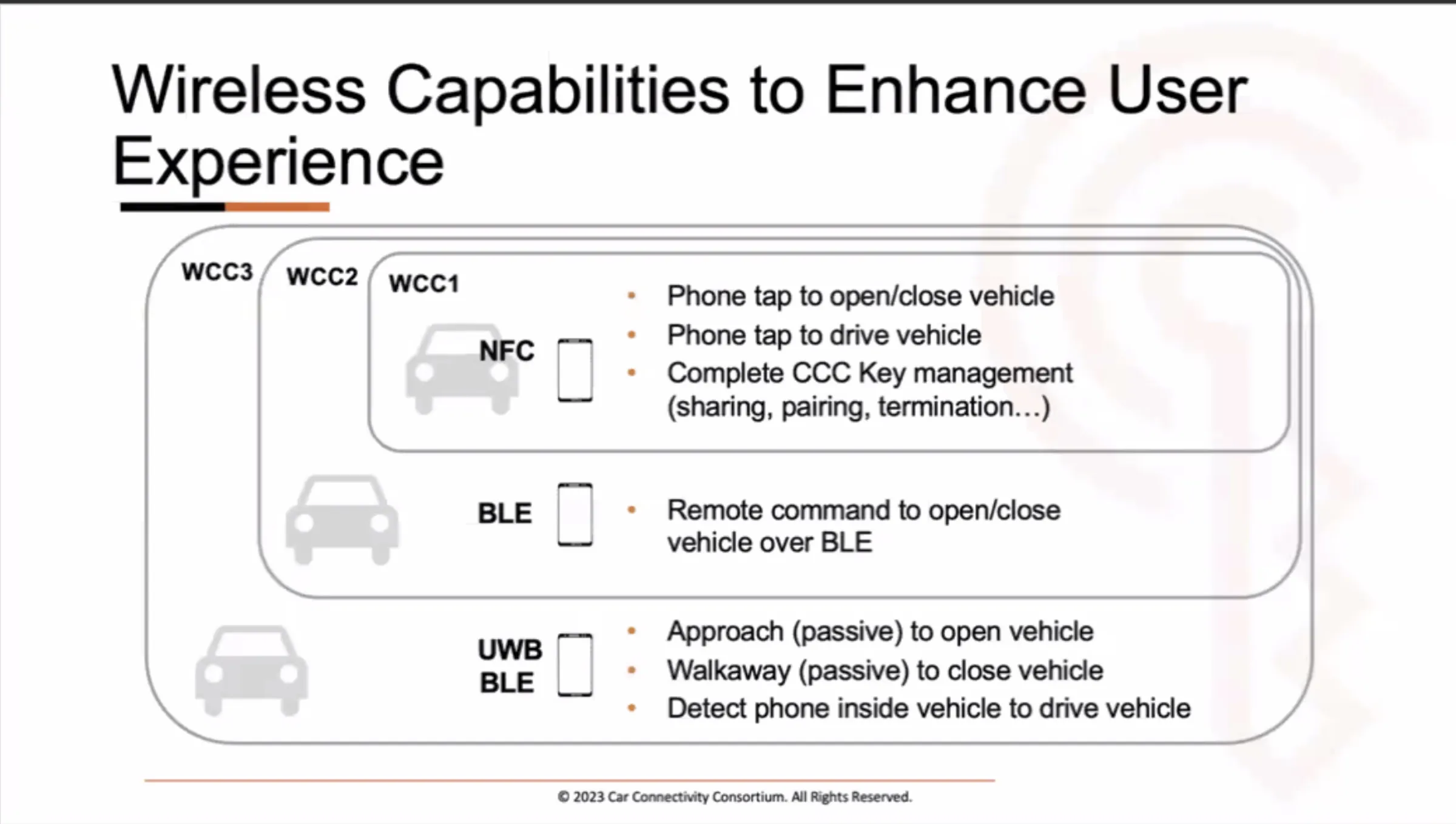
L’avenir dira laquelle de ces normes remportera le marché, mais pour l’instant, il semble que leurs domaines d’application et leurs ensembles de fonctionnalités soient clairement définis de manière à ne pas entrer en concurrence. À ce jour, le consortium FiRa a pris le plus d’élan, car il génère le plus grand volume de ventes de puces UWB. La norme Omlox doit encore faire ses preuves, la version initiale n’ayant été qu’une preuve de concept limitée. Avec la version 2.0 d’Omlox, nous verrons enfin des produits certifiés Omlox arriver sur le marché dans les prochaines années.
Étant donné que les différentes normes répondent à des cas d’usage différents, il est possible qu’elles coexistent durablement. Comme on le voit, ces normes se rapprochent les unes des autres afin de garantir la coexistence des différentes normes ou d’éventuels cas d’usage combinés. L’inclusion de la CCC Digital Key dans la dernière norme FiRa en est un exemple. De même, une liaison entre FiRa et Omlox a été initiée en 2023 et a abouti à la création d’un groupe de travail commun en 2024.
6. Avancées récentes de l’UWB et perspectives pour 2024
L’année 2024 a été importante pour l’UWB, avec la mise à disposition de nombreux nouveaux chipsets UWB, des réglementations mises à jour dans l’UE et en Chine, ainsi qu’une mise à jour de la norme FiRa, qui génère le volume le plus important de puces UWB. Les rapports d’études de marché indiquent que les ventes de puces UWB ont augmenté pour atteindre 450 à 500 millions d’unités. On s’attend à ce que 2025 affiche à nouveau une croissance significative avec l’arrivée de nouveaux produits sur le marché, tirant parti des nouveaux chipsets.
Pour 2025, nous n’anticipons pas de changements majeurs en matière de réglementation, car ceux-ci interviendront probablement en 2027 après la Conférence mondiale des radiocommunications. Les récentes évolutions de la réglementation européenne peuvent potentiellement accroître la viabilité des applications RTLS UWB, car la portée peut être augmentée et l’usage en extérieur est désormais autorisé.
À plus long terme, nous pouvons observer une attention accrue portée au radar UWB, qui permettrait la détection de présence et de santé des personnes sans qu’elles aient à porter d’appareil électronique. Cela a des applications dans l’automobile pour la détection de présence d’enfant, mais aussi dans les objets connectés pour la maison. En outre, avec la prochaine norme IEEE 802.15.4ab en 2025, nous verrons arriver sur le marché une nouvelle génération de puces UWB avec une consommation d’énergie encore réduite, une sécurité renforcée et une prise en charge inédite du streaming audio. Concernant les normes d’application, nous pourrions voir une collaboration accrue entre les différentes normes, étant donné qu’elles sont dans une large mesure très complémentaires. Que cela réussisse ou non, seul l’avenir nous le dira.
D’ici 2025-2026, nous nous attendons à ce que l’UWB passe d’une technologie spécialisée à une norme de connectivité essentielle, un peu comme le Wi-Fi et le Bluetooth aujourd’hui. Avec des améliorations réglementaires majeures, des écosystèmes en expansion et une adoption généralisée par l’industrie, l’UWB est appelée à transformer les services basés sur la localisation, l’automatisation et la sécurité.
Rédigé par
Samuel Van de Velde

CTO et co-fondateur chez Pozyx
Samuel est ingénieur électricien avec un fort intérêt pour la technologie de localisation. Compétent en entrepreneuriat, prise de parole en public, gestion de produit, Internet des objets (IoT) et apprentissage automatique. Après avoir obtenu son diplôme en 2010, il a rejoint le Département des télécommunications et du traitement numérique de l'information (TELIN) pour poursuivre un doctorat sur le sujet de la localisation collaborative en intérieur. En 2015, il a fondé la spin-off Pozyx issue de cette recherche.