Aller au-delà de la télématique standard des chariots élévateurs grâce aux données de localisation
Aller au-delà de la télématique standard des chariots élévateurs grâce aux données de localisation

Ces dernières années, de plus en plus de fabricants de chariots élévateurs ont commencé à proposer des systèmes de télématique qui fournissent une grande quantité de données. Vous pouvez voir les heures moteur, les niveaux de batterie, les impacts, les identifiants des opérateurs et la vitesse. Sur le papier, on a l’impression d’avoir une visibilité totale sur votre flotte. En réalité, la plupart de ces solutions de télématique sont difficiles à interpréter ou à exploiter, car il leur manque une chose essentielle : le contexte.
Sans contexte — comme l’endroit où l’événement s’est produit, qui ou quoi se trouvait à proximité, et ce qui l’a précédé — ces données de télématique sont très difficiles à interpréter de manière pertinente. Pensez à une voiture. Si vous ne connaissez que sa vitesse, sans savoir si elle roule sur une autoroute ou dans un centre-ville très fréquenté, vous ne pouvez pas vraiment juger si cette vitesse est appropriée. Il en va de même pour les chariots élévateurs.
Cette différence entre savoir comment une machine fonctionne et comprendre comment elle est utilisée est précisément là où se cachent de nombreuses inefficacités du quotidien. Dans des opérations très sollicitées, avec des plannings serrés et des flux complexes, ces petites inefficacités s’accumulent rapidement et commencent à impacter les performances de manière très concrète.
À quoi servait la télématique standard
La télématique pour chariots élévateurs est née de la gestion de flotte, et cet héritage se voit dans ce qu’elle fait le mieux. Elle excelle dans le suivi au niveau machine : suivi des heures d’utilisation pour planifier la maintenance, détection des impacts violents pour accompagner les opérateurs, application des listes de contrôle avant prise de poste, et enregistrement de qui a conduit quel chariot et à quel moment.
C’est réellement utile. La maintenance préventive à elle seule peut prolonger de manière significative la durée de vie des équipements, et le suivi des impacts a un effet mesurable sur les taux de dommages. Personne ne conteste l’intérêt de la télématique.
La limite ne vient pas des données, mais du cadre de référence. La télématique considère le chariot élévateur comme l’unité d’analyse. L’intelligence de localisation considère l’exploitation comme l’unité d’analyse. Ce sont deux questions différentes.
Lorsqu’un chariot élévateur enregistre 40 minutes d’inactivité, la télématique vous donne l’horodatage. Ce qu’elle ne peut pas vous dire, c’est si le chariot était à la station de charge, bloqué derrière une porte de quai encombrée, en attente d’une confirmation de prélèvement qui n’est jamais arrivée, ou garé dans la mauvaise zone. L’événement est enregistré ; le contexte manque.
Ce qu’apportent réellement les données de localisation
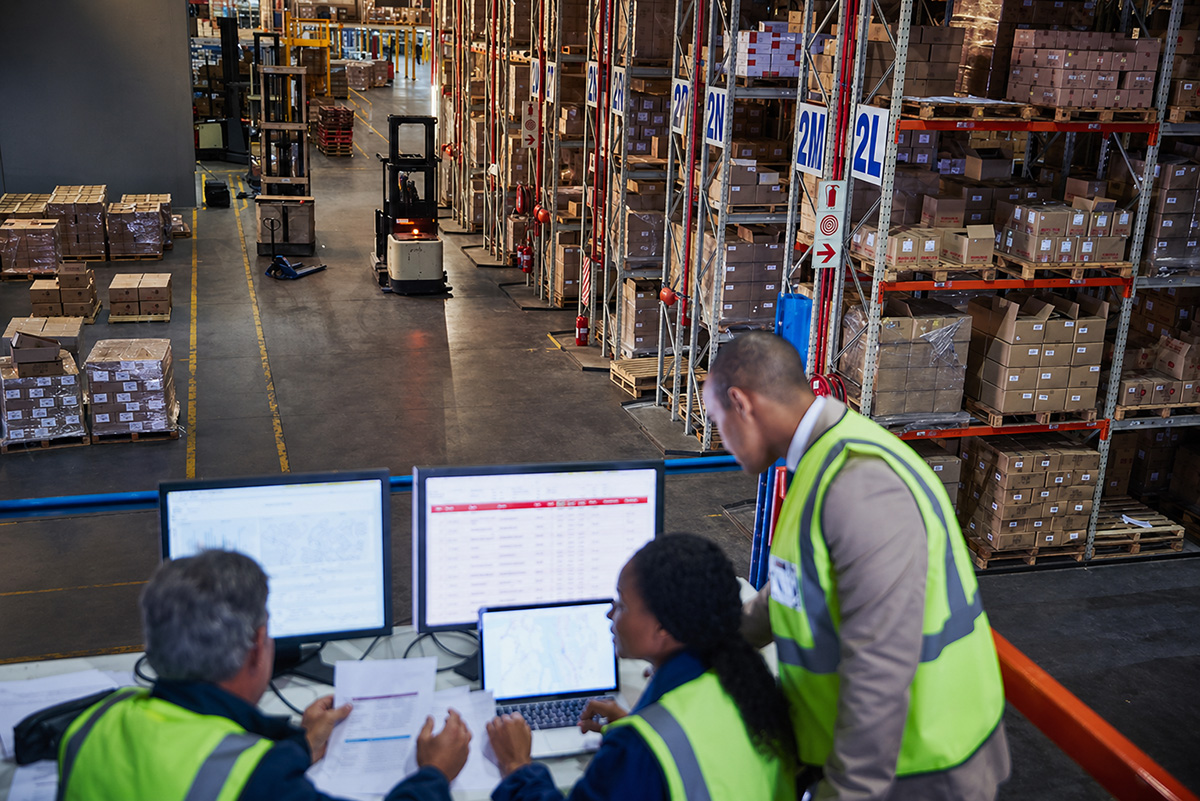
Un chariot élévateur équipé pour des opérations intelligentes transporte simultanément plusieurs flux de données : localisation, vitesse, détection de charge, hauteur des fourches, accélération et orientation. Chacun répond à une question différente. La localisation donne un contexte opérationnel à toutes les autres mesures. Une alerte de vitesse sans localisation est un point de donnée. Une alerte de vitesse dans un couloir piéton, sur un chariot chargé, fourches levées, est un événement de sécurité exploitable.
Ajouter la localisation en temps réel à votre flotte de chariots ne remplace pas la télématique ; cela lui donne du contexte. Les données machine et les données spatiales, ensemble, répondent à des questions qu’aucune ne peut résoudre seule. Voici à quoi cela ressemble en pratique :
- Temps d’immobilisation par zone. Vous voyez non seulement qu’un chariot a été actif pendant six heures, mais aussi comment ce temps s’est réparti dans votre site, combien de temps il a passé à chaque quai, dans chaque allée, dans la zone de préparation. Lorsque vous agrégerez cela sur plusieurs semaines pour l’ensemble de votre flotte, des tendances apparaîtront. Certaines zones attirent systématiquement plus de trafic qu’elles ne le devraient. D’autres sont des goulots d’étranglement chroniques que personne n’a formellement identifiés parce que le problème est diffus.
- Efficacité des trajets. Vos chariots suivent-ils des parcours logiques entre les zones de prélèvement et la préparation, ou font-ils des allers-retours inutiles ? Dans les sites qui n’ont pas réalisé d’analyse de flux depuis quelques années, il est courant de trouver des schémas de déplacement qui avaient du sens lorsque l’agencement était différent, mais qui n’ont pas évolué depuis. Les données de localisation révèlent cela sans nécessiter d’étude de temps.
- Visibilité de la position en temps réel. Les superviseurs peuvent voir où se trouve chaque actif sur le site à tout moment. Lorsqu’une palette disparaît ou qu’une tâche prend du retard, la première question — où est le chariot censé s’en occuper ? — obtient une réponse immédiate, au lieu d’appels radio ou d’une recherche sur le terrain.
- Corrélation inter-flotte. Lorsque vous combinez la localisation avec les événements de télématique, vous commencez à répondre à des questions plus sophistiquées. Cette alerte d’impact dans l’allée 7 était-elle liée à une congestion causée par deux autres chariots dans la même zone ? Le chariot qui a enregistré un temps d’inactivité excessif l’a-t-il fait de manière récurrente près du quai nord, ce qui suggère un problème de flux de travail plutôt qu’un problème de comportement de l’opérateur ?

Comment cela se traduit sur un véritable site de production
Une grande usine d’assemblage de poids lourds en Europe fonctionnait sur 35 000 m² d’espace usine et d’entrepôt avec environ 100 équipements mobiles — chariots élévateurs, préparateurs de commandes, chariots à mât rétractable et trains tracteurs — assurant des flux d’approvisionnement juste-à-temps sur plusieurs lignes de production.
Le responsable logistique a identifié deux problèmes qui se renforçaient mutuellement. D’abord, l’intensité du trafic était suffisamment élevée pour que les changements d’équipe et les pauses créent des points de congestion dangereux, tous les équipements convergeant simultanément vers l’entrepôt, sans visibilité en temps réel sur leur emplacement. Ensuite, la complexité des flux logistiques rendait presque impossible l’évaluation des performances réelles de la flotte. Ils disposaient de données d’utilisation, mais pas du contexte spatial nécessaire pour les transformer en décisions.
"L’augmentation de l’intensité du trafic et les contraintes spatiales ont rendu nécessaire une solution transformatrice pour nos défis logistiques. Le RTLS nous offre les outils pour améliorer la productivité et la sécurité au sein de notre usine."
-- Chef de projet, usine d’assemblage de poids lourds
Après le déploiement de Pozyx UWB RTLS sur 35 000 m², les chariots élévateurs pouvaient être suivis avec une précision de 10 cm dans l’ensemble du site. L’équipe a gagné trois capacités qu’elle n’avait pas auparavant :
| TRS par véhicule | Analytique spatiale | Gestion de la congestion |
|---|---|---|
|
Temps de marche et d’arrêt, distance parcourue, trajets chargés vs. à vide, le tout ventilé par actif et par période. Pour la première fois, ils ont pu identifier les actifs redondants et dimensionner la flotte au plus juste à partir de données réelles. |
Cartes thermiques et diagrammes spaghetti montrant précisément où la congestion se formait et où les trajets étaient inefficaces. La fonction de relecture leur permettait d’examiner le parcours de n’importe quel véhicule à n’importe quel moment. |
Grâce à des cartes en direct des positions des équipements, les opérateurs pouvaient laisser les véhicules à leur place pendant les pauses au lieu de converger simultanément vers l’entrepôt. La concentration du trafic aux changements d’équipe a nettement diminué. |
Découvrez la plateforme Pozyx
La plateforme Pozyx regroupe les données de positionnement intérieures et extérieures pour fournir une visibilité complète des actifs et des enseignements basées sur la localisation au bénéfice de la logistique et la fabrication. Il facilite le contrôle des entrepôts et des stocks, assure le suivi des emballages et des commandes retournables et réduit les coûts liés à la perte d'actifs.
Plateforme Pozyx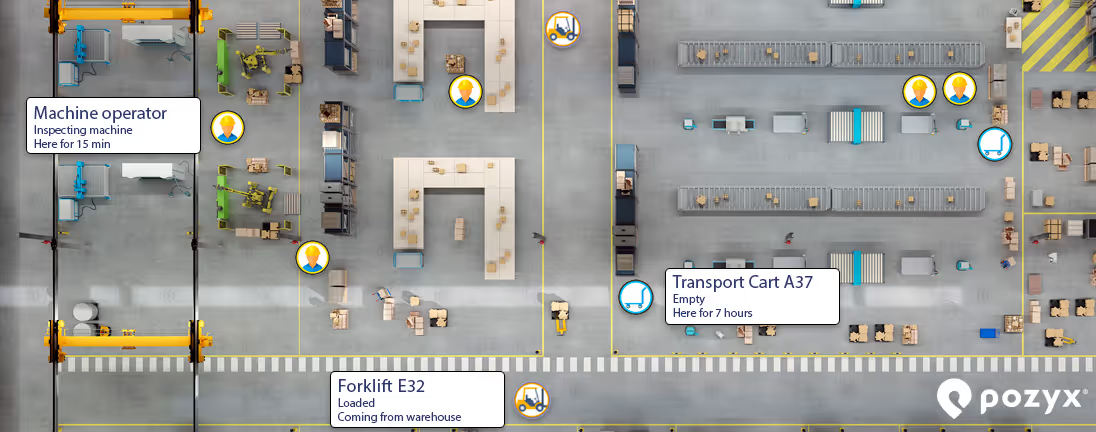
La dimension sécurité et conformité
Les données de localisation ont une application en matière de sécurité qui est souvent négligée dans les discussions sur le ROI, mais qui pèse lourdement pour les équipes de direction des opérations comme pour les équipes de gestion des risques.
La télématique standard peut vous dire qu’un chariot élévateur a heurté quelque chose. La localisation, combinée à l’ensemble des capteurs, vous en dit bien plus. Lorsque la vitesse, l’état de la charge, la hauteur des fourches, l’accélération et l’orientation sont lus avec un positionnement précis, une nouvelle catégorie d’alertes devient possible :
Alertes de sécurité nécessitant un contexte spatial
- Vitesse trop élevée dans une zone piétonne géofencée
- Fourches non abaissées à l’entrée d’une zone piétonne
- Virage trop rapide avec une charge élevée
- Entrée dans une zone restreinte avec des marchandises
Alertes de processus et d’efficacité
- Dépôt à l’endroit incorrect
- Inactivité trop longue dans une zone de production
- Un trajet chargé très long suggère un problème d’acheminement
Alertes de conformité
- Utilisation non autorisée en dehors des zones définies ou des plages horaires prévues
- Des micro-collisions fréquentes dans une zone précise pointent vers un problème structurel d’agencement plutôt que vers le comportement d’un opérateur individuel
La différence est importante pour l’analyse d’incidents. Examiner un impact isolé ou analyser une carte thermique de tous les impacts sur 90 jours dans une zone donnée sont deux analyses fondamentalement différentes. La première vous dit qu’un événement s’est produit. La seconde vous dit si vous avez un problème structurel qui génère des événements.
Pour les opérations qui visent l’ISO 45001 ou qui doivent rester conformes aux normes OSHA relatives aux chariots industriels motorisés, la capacité à démontrer une surveillance spatiale active plutôt qu’un simple enregistrement réactif des incidents constitue une différence significative. Pour aller encore plus loin dans l’amélioration de la sécurité, découvrez la solution d’évitement des collisions de chariots élévateurs.
Quel est le ROI du suivi des chariots élévateurs ?
Le ROI du suivi des chariots élévateurs commence par l’amélioration du fonctionnement de votre flotte existante. Lorsque vous combinez les données de localisation avec la télématique, plusieurs bénéfices immédiats apparaissent :
Les gains d’efficacité de la flotte proviennent de l’optimisation des trajets, de la réduction du temps de recherche des actifs et de l’élimination de la surcharge de coordination informelle que la visibilité de localisation remplace. Les analyses vous fournissent les données nécessaires pour dimensionner votre flotte au plus juste, en identifiant les actifs redondants et en alignant l’allocation des équipements sur les schémas de demande réels plutôt que sur des hypothèses historiques.
La réduction des coûts liés aux incidents vient de l’ajout d’un contexte spatial aux événements de sécurité. Au lieu de réagir à des alertes d’impact isolées, vous pouvez identifier de manière proactive les zones à risque, réduire la fréquence des incidents et diminuer les coûts associés aux dommages, aux arrêts et aux enquêtes.
L’amélioration de la précision des stocks et des processus résulte de la suppression des scans manuels et de la réduction de l’écart entre les enregistrements système et la réalité physique. Lorsque les déplacements sont automatiquement suivis dans l’ensemble du site, la planification et l’exécution deviennent plus fiables et plus rapides.
Mais se concentrer uniquement sur les chariots élévateurs sous-estime l’opportunité globale.
Avec un système RTLS en place, vous n’êtes pas obligé de vous limiter au suivi des chariots élévateurs. La même infrastructure peut être utilisée pour suivre les AGV, les AMR, les chariots, les trains tracteurs et même les opérateurs. Rassembler tous ces éléments dans un contexte spatial partagé vous permet de comprendre comment les différentes composantes de votre exploitation interagissent.
C’est là que le business case prend de l’ampleur. Vous n’optimisez plus un seul type d’actif, mais le flux de l’ensemble de l’exploitation.
Par où commencer
L’intelligence de localisation ne nécessite pas de remplacer votre pile de télématique existante. Les deux sont complémentaires. Votre système actuel capture déjà des événements au niveau machine qui comptent. Ce qui lui manque, c’est la couche spatiale qui vous dit ce que ces événements signifient réellement dans le contexte de votre exploitation.
Les sites qui exploitent ces données en premier constatent souvent la même chose : les inefficacités étaient déjà là. Elles n’étaient simplement pas visibles. Dérive des trajets, congestion des zones, écarts de WIP, palettes mal placées et incidents évitables ne sont pas de nouveaux problèmes. Les données de localisation les rendent mesurables, et les problèmes mesurables sont résolus.
Le point de départ est généralement plus simple qu’il n’y paraît. Choisissez dès maintenant le problème le plus coûteux de votre exploitation et remontez en arrière pour déterminer quelles données vous diraient s’il s’améliore. Qu’il s’agisse de la précision des stocks, du temps de trajet des chariots, de la fréquence des incidents ou de la visibilité du WIP, c’est là que commence la conversation avec Pozyx.
Découvrez ce qui manque à vos données de flotte
Nous vous montrerons à quoi ressemblerait l’intelligence de localisation pour votre exploitation spécifique, en tenant compte de l’agencement de votre site, de votre cas d’usage et de votre pile de télématique existante.
Rédigé par
Benjamin Smith, MBA

Spécialiste Marketing chez Pozyx
Ben combine une expérience en développement commercial et en étude de marché avec un fort intérêt pour la technologie industrielle et l'intelligence de localisation. Il est passionné par l'exploration des façons dont les technologies de suivi innovantes peuvent améliorer l'efficacité, la visibilité et la prise de décision dans divers secteurs.