The State of UWB in 2022 Trend 2

The State of UWB in 2022
7 Trends that shape the RTLS landscape
Trend #2 Global regulations enable worldwide coverage
The clear definitions from the IEE802.15.4 standard specify three frequency bands, yielding 16 radio channels in total. Regulation has followed and every country’s regional regulatory authorities define which of these bands can or cannot be used geographically, resulting in well-defined UWB regulations. The new generation of UWB chipsets allows new regions, such as Japan, to be covered with the same technology. Today the situation is clear and fixed in all the principal geographies, while in some smaller countries, it is evolving rapidly and converging with existing local regulations.
Instances like the UWB Alliance also help to support UWB adoption by actively lobbying to make outdoor UWB regulations more flexible.
The concern with UWB could be that the signal occupies such a wide bandwidth (500 MHz to 1300 MHz as defined in the IEEE802.15.4 standard) that the potential of interference with other wireless communication technologies occupying the same spectrum becomes real. This is unfounded since the power levels for UWB transmission are extremely low compared to the potentially impacted services. UWB has also developed a number of mitigation strategies that regulators have adopted to avoid interference.
Learn more in the eBook and read the first chapters
Download the pdf for better readability and for future reference
And get bonus content with quotes from industry leaders & infographics
Découvrez la plateforme Pozyx
La plateforme Pozyx regroupe les données de positionnement intérieures et extérieures pour fournir une visibilité complète des actifs et des enseignements basées sur la localisation au bénéfice de la logistique et la fabrication. Il facilite le contrôle des entrepôts et des stocks, assure le suivi des emballages et des commandes retournables et réduit les coûts liés à la perte d'actifs.
Plateforme Pozyx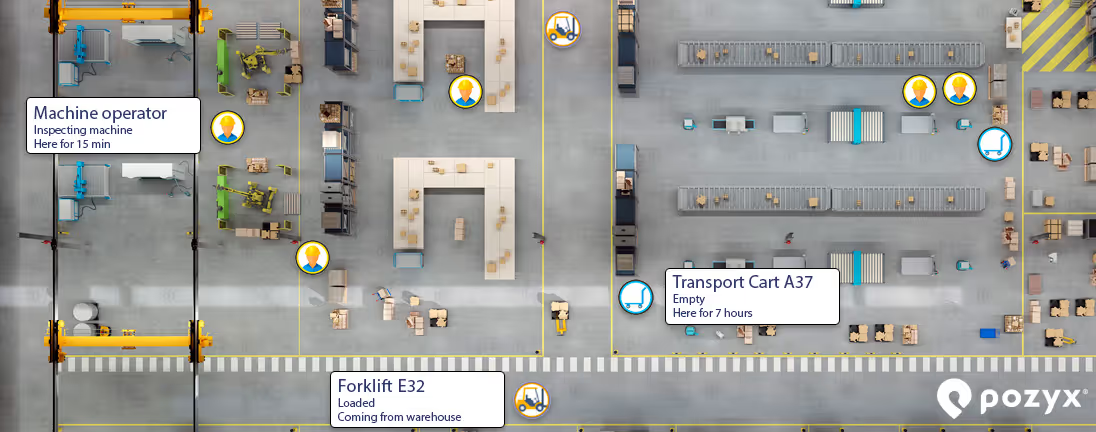
7 trends are key drivers for UWB success
eBook Content
Introduction & short history of UWB - analyst predictions
#1 Chip interoperability is guaranteed through a solid IEEE standard
#2 Global regulations enable worldwide coverage
#3 Semiconductors to choose from propagate adoption & avoid vendor lock-in
#4 Application standardization is secured by alliances & consortiums
#5 UWB is the growing star in the center of active research
#6 Mature RTLS deployment tools bolster quick and reliable RTLS solutions
#7 Growing RTLS ecosystem boosts application confidence
Interested in all 7 trends?
Rédigé par
Elly Schietse

Directrice Marketing chez Pozyx
Directrice expérimentée avec un historique avéré de collaboration avec des entreprises technologiques mondiales, dans l'IoT, l'informatique, les semi-conducteurs et l'industrie high-tech. Longue expérience en gestion, marketing, qualité (ISO 9001 & ISO 14001) et SMSI (ISO 27001).