UWB versus autres technologies de suivi en 2026

Choisir la bonne technologie de suivi en intérieur pour votre entreprise est essentiel pour obtenir des résultats concluants. Chaque technologie de suivi a ses propres avantages et inconvénients. Cet article compare la technologie ultra-large bande (UWB) de Pozyx à d’autres technologies de suivi, afin que vous puissiez faire le bon choix pour votre entreprise. L’ultra-large bande est une solution de localisation ultra-précise et rentable pour le suivi en intérieur.

Veuillez noter que nous n’avons pas inclus toutes les technologies de suivi possibles dans cet aperçu. Parmi les autres technologies notables figurent le positionnement 5G, le positionnement par lumière visible ou le positionnement par ultrasons. Ces technologies sont omises car elles restent à ce jour de niche, soit parce qu’elles sont encore en phase de recherche active, soit parce que leur pénétration sur le marché est très faible.
UWB versus GPS
Le GPS (ou plus généralement le GNSS) est une technologie de suivi bien connue et utilisée quotidiennement par des millions de personnes. Le suivi GPS standard peut offrir une précision d’environ 10 m dans la plupart des régions extérieures du monde. Son inconvénient le plus important est qu’il ne fonctionne pas en intérieur, ni dans les « canyons urbains » (villes avec de hauts bâtiments). Pour le suivi d’actifs, les traceurs GPS nécessitent toujours une liaison de communication pour envoyer la position de l’appareil vers un logiciel de suivi d’actifs. En général, la connectivité est fournie par le réseau cellulaire comme la 2G, la 4G ou la 5G, ou par un réseau sans fil longue portée comme LoRaWAN. Tout cela implique des frais mensuels de connectivité. Aujourd’hui, les récepteurs GPS/GNSS restent relativement gourmands en énergie, donc à moins que le traceur GPS ne puisse être alimenté, le nombre de mises à jour GPS par jour est limité à quelques mises à jour par jour ou par heure.
La technologie ultra-large bande, en revanche, est conçue pour le suivi en intérieur et ne rencontre pas les mêmes défis que le GPS en intérieur. Elle affiche une précision de 10 à 30 cm, ne nécessite pas de connectivité payante et peut fonctionner plus de 5 ans avec une seule batterie, avec des mises à jour toutes les quelques secondes. L’inconvénient du suivi UWB est qu’il nécessite l’installation d’une infrastructure sur site.
Les données de localisation UWB peuvent également être combinées avec les données de localisation GPS dans la plateforme Pozyx. La plateforme est compatible avec le GPS conformément à la norme omlox, et peut donc combiner les signaux ultra-large bande de Pozyx avec les signaux GPS. Ainsi, le suivi des actifs de l’intérieur vers l’extérieur, et inversement, avec une transition fluide n’a jamais été aussi simple.

UWB versus RFID
La RFID, ou identification par radiofréquence, utilise des ondes radio pour envoyer ou recevoir des informations sans fil. Le système utilise des étiquettes contenant des informations uniques, attachées à une personne ou à un objet. Avec la RFID, il est important de distinguer la RFID active de la RFID passive, car les deux fonctionnent différemment.
UWB versus RFID passive
Avec la RFID passive, l’étiquette doit passer devant un lecteur passerelle avant d’être localisée. Il n’y a pas de positionnement en temps réel. Ces étiquettes sont peu coûteuses, à partir de quelques centimes, car elles n’ont pas leur propre source d’énergie et ne s’activent que lorsqu’elles reçoivent un signal radio de l’antenne.
Une application quotidienne bien connue de la RFID est le NFC, un sous-ensemble de la RFID qui fonctionne à une fréquence plus élevée. Il est utilisé par exemple dans les portes d’accès des stations de métro, où vous devez scanner votre carte avec une puce NFC sur le lecteur NFC pour ouvrir les portes. D’autres usages incluent les étiquettes RFID dans les vêtements ou d’autres produits de vente au détail.
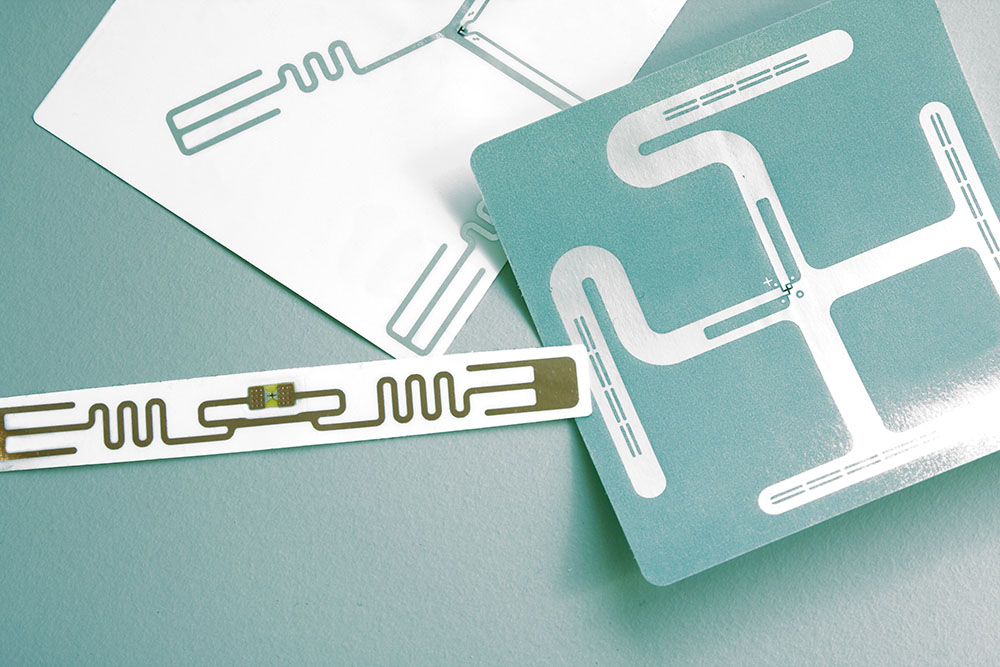
Lorsqu’il s’agit de retrouver des actifs, la RFID passive est mal adaptée. Non seulement la RFID passive présente une marge d’erreur de 3 %, mais si un actif est perdu, il est très probable qu’il n’ait pas franchi le lecteur passerelle, ce qui signifie qu’il ne s’est pas activé et n’a envoyé aucune information de localisation. Cette marge d’erreur devient vraiment problématique pour le suivi d’actifs métalliques, car cela affecte fortement la lisibilité d’une étiquette RFID. Avec l’ultra-large bande, les étiquettes transmettent les informations à une fréquence plus élevée et sont localisées en temps réel, ce qui rend vos actifs visibles en permanence, dans tout le bâtiment.
Dans notre étude de cas Bonduelle, il devient clair que l’ultra-large bande et la RFID passive peuvent fonctionner ensemble de manière fluide. Bien que Bonduelle utilisait déjà la RFID pour suivre ses palettes, l’entreprise égarait et perdait encore d’innombrables palettes chaque année. En installant le système Pozyx et en fixant les étiquettes industrielles à leurs chariots élévateurs, ils savaient quels actifs étaient pris et déposés à quels endroits, ce qui a entraîné un gain d’efficacité de 3 %.
UWB versus RFID active
Dans les systèmes RFID actifs, les étiquettes disposent de leur propre source d’alimentation, ce qui leur permet de transmettre des données en continu et rend le positionnement en temps réel possible. La précision peut atteindre 3 mètres (ou 10 pieds), alors que la technologie ultra-large bande offre une précision de 10 à 30 cm (4 à 12 pouces). Une différence énorme. De plus, la RFID active présente un taux d’échec compris entre 5 % et 20 %. Compte tenu de ces défis et du coût plus élevé de la RFID active, l’ultra-large bande est ici la meilleure option, à la fois en termes de performance et de rentabilité.
Découvrez la plateforme Pozyx
La plateforme Pozyx regroupe les données de positionnement intérieures et extérieures pour fournir une visibilité complète des actifs et des enseignements basées sur la localisation au bénéfice de la logistique et la fabrication. Il facilite le contrôle des entrepôts et des stocks, assure le suivi des emballages et des commandes retournables et réduit les coûts liés à la perte d'actifs.
Plateforme Pozyx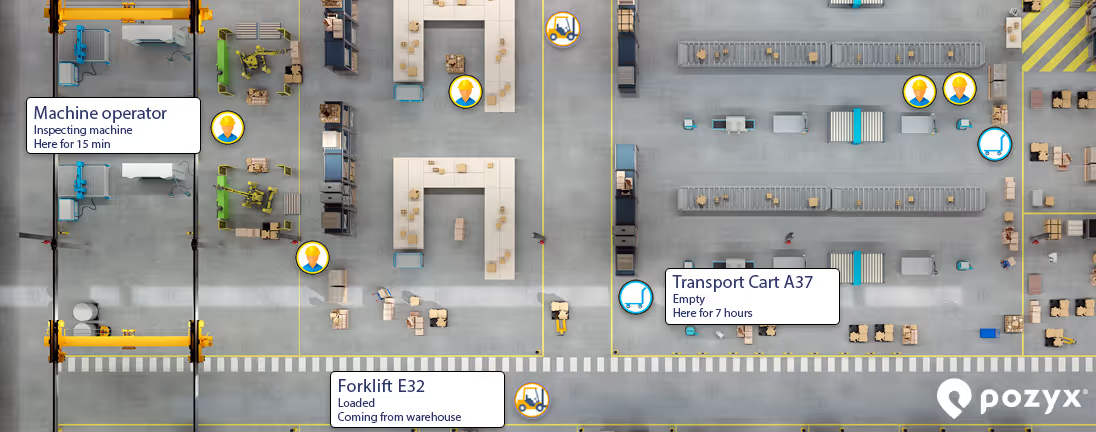
UWB versus BLE
Le Bluetooth est une technologie de communication largement adoptée et utilisée au quotidien pour de nombreux appareils sans fil. Casques, souris sans fil, claviers et enceintes utilisent tous le Bluetooth pour se connecter à nos smartphones et ordinateurs portables.
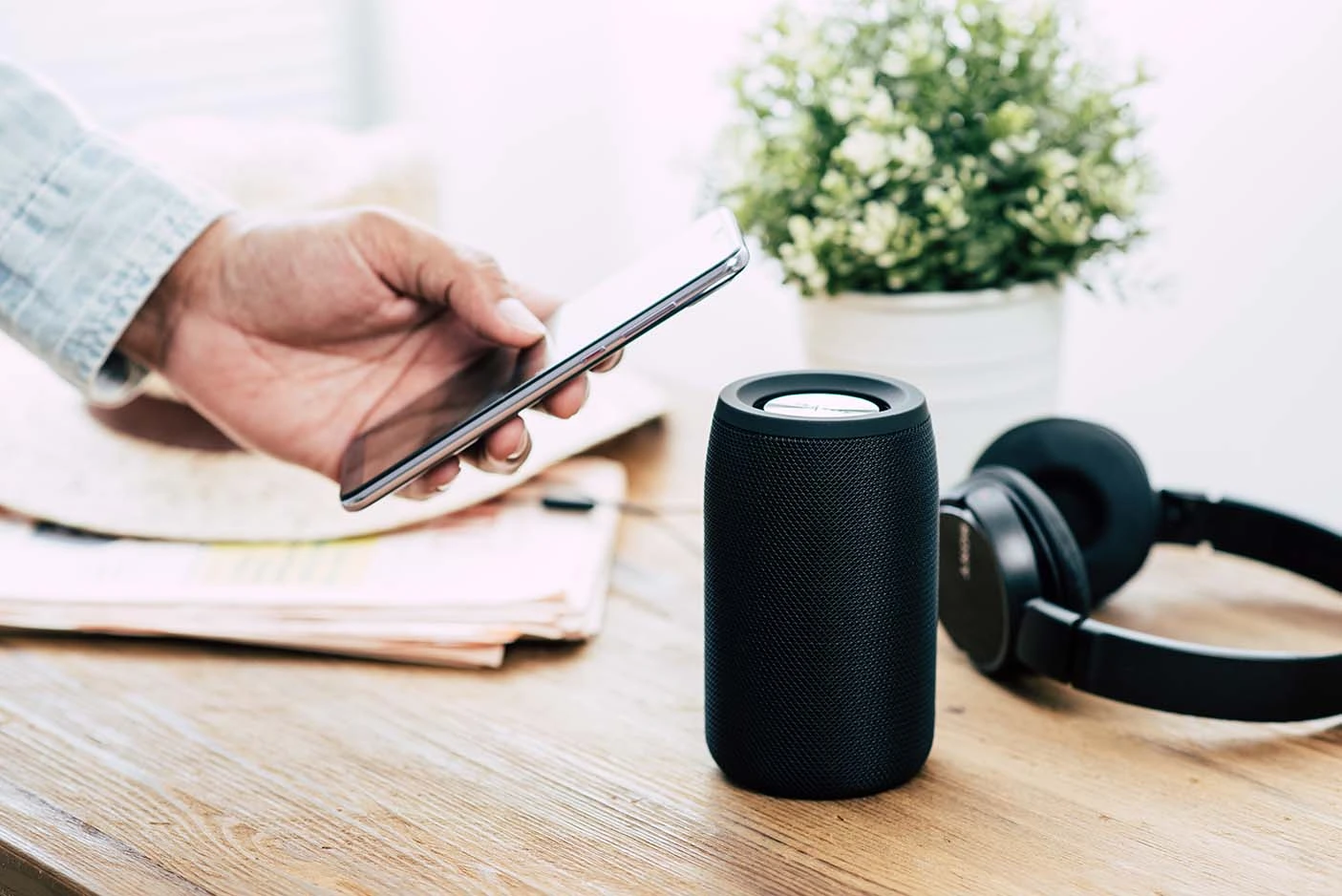
Le Bluetooth Low Energy, ou BLE, a été introduit en 2010. Il utilise la même technologie que le Bluetooth classique mais, comme son nom l’indique, consomme beaucoup moins d’énergie pour communiquer avec d’autres appareils. Ses usages les plus courants se trouvent dans les objets connectés, le suivi d’actifs et le positionnement en intérieur.
Le BLE n’a pas été conçu à l’origine pour le suivi en intérieur et constitue plutôt un sous-produit de la technologie. Il fonctionne en calculant la position de l’étiquette BLE à partir de la puissance du signal reçue par plusieurs balises. Cela s’appelle le RSSI (indicateur de puissance du signal reçu) et ce n’est pas l’outil de mesure le plus efficace. Le suivi BLE offre une précision d’environ 5 mètres et n’est efficace que 90 % du temps, alors que la technologie ultra-large bande peut atteindre une précision de positionnement de 10 à 30 cm. Cela s’explique par le fait que le système ultra-large bande ne mesure pas la position via la puissance du signal, mais via le Time of Flight (ToF). Il calcule le temps nécessaire à l’onde radio pour parcourir la distance entre l’étiquette et l’ancre. Le système Pozyx calcule cela pour au moins trois ancres et positionne l’étiquette à l’intersection des trois distances ; cela s’appelle la trilatération.
En termes d’autonomie des étiquettes, le BLE et l’UWB sont relativement comparables, tous deux pouvant durer plusieurs années avec une seule batterie tout en envoyant des mises à jour de localisation toutes les quelques secondes. En termes de coût, les étiquettes UWB coûtent environ deux fois plus cher que les étiquettes BLE.
Depuis 2019, la norme BLE 5.1 prend également en charge le soi-disant angle-of-arrival, qui améliore la précision du positionnement à moins d’un mètre. Cependant, cela ne fonctionne pas avec les étiquettes BLE standard et nécessite une infrastructure plus dense et plus complexe capable de mesurer l’angle.
En fonction du coût et de la précision requise, le BLE comme l’UWB peuvent être de bonnes options pour le suivi en intérieur. En général, l’UWB est considérée comme la référence absolue et est recommandée pour les environnements industriels. En revanche, dans les environnements de bureau, d’école ou d’hôpital, le BLE est souvent une technologie adaptée. Avec le Pozyx RTLS, vous n’avez pas à choisir : l’infrastructure peut prendre en charge les étiquettes BLE et UWB, ce qui vous permet de sélectionner l’étiquette la plus adaptée en fonction du coût et du niveau de précision requis.
UWB versus suivi basé sur caméra
Le positionnement basé sur caméra est devenu plus viable grâce à l’essor du traitement d’images alimenté par l’IA. Deux approches distinctes du positionnement sont décrites ci-dessous. Cependant, elles ont en commun de nécessiter encore un traitement intensif, entraînant une forte consommation d’énergie et l’utilisation d’unités de traitement (coûteuses).
Infrastructure de caméras
Dans une première approche, une infrastructure de caméras fixes composée de plusieurs caméras dans plusieurs pièces est utilisée pour suivre des personnes, des véhicules ou d’autres actifs dans le champ de vision. Avec un modèle d’IA entraîné spécifiquement pour détecter ces objets, il est possible de localiser ces objets en temps réel. L’un des défis du suivi par caméra est la capacité à identifier l’objet suivi. Suivre des vaches, des rayonnages ou des boîtes qui se ressemblent toutes est possible, mais il est très difficile de dire laquelle se trouve où. Ce problème devient encore plus complexe lorsque les objets passent d’une caméra à l’autre. Le système de caméras doit d’une manière ou d’une autre identifier l’objet et savoir qu’il s’agit du même qui se déplace d’une zone à l’autre. En pratique, ces systèmes ne peuvent pas le faire sans erreur. De plus, les situations où les objets sont déformés, (partiellement) cachés ou mal éclairés peuvent entraîner des erreurs de suivi, voire l’impossibilité totale de suivre l’objet.
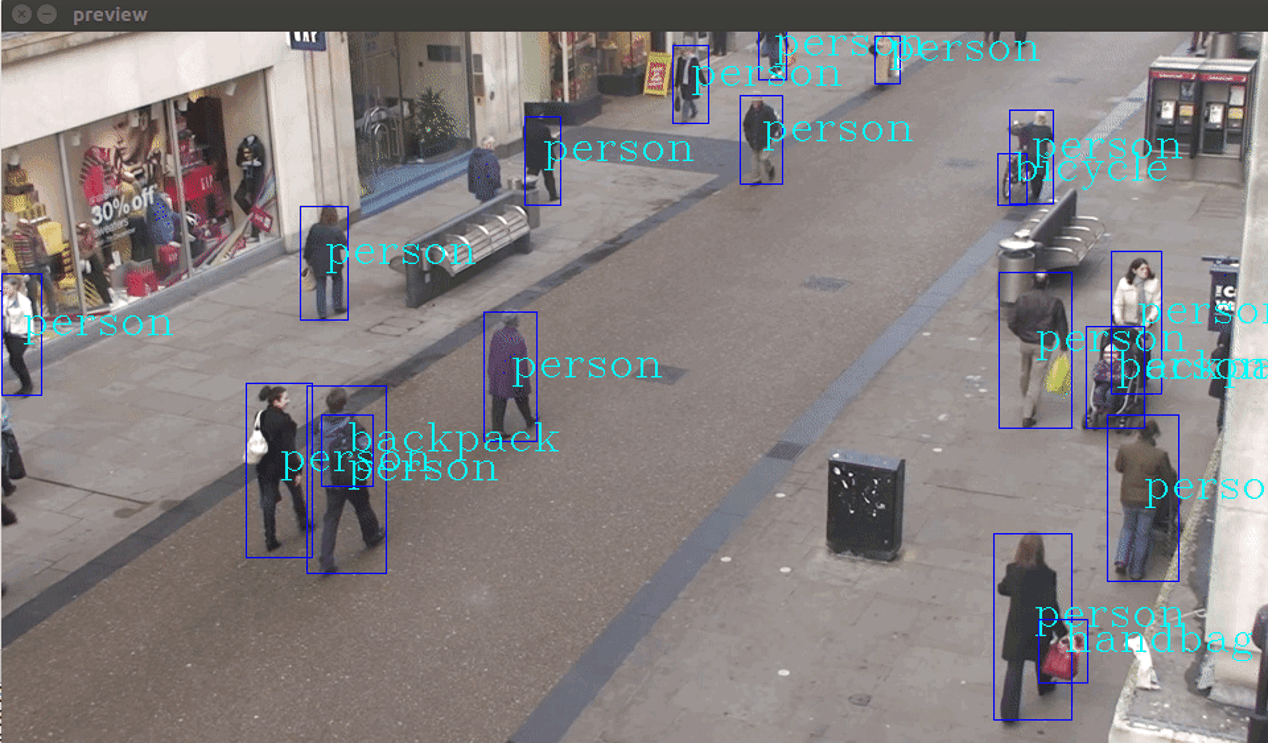
Ces défis, associés à d’éventuelles préoccupations en matière de confidentialité, rendent le suivi par caméra moins adapté à la plupart des applications de suivi d’actifs. À l’inverse, avec l’UWB, chaque actif dispose d’un traceur unique avec un identifiant unique, ce qui résout le problème d’association. La fiabilité du suivi UWB est nettement meilleure que celle d’un système basé sur caméra. L’inconvénient est bien sûr que chaque objet que vous souhaitez suivre nécessite un traceur.
Traceurs caméra
Dans une autre approche, la caméra est fixée à l’actif à suivre. De la même manière que les personnes utilisent leurs yeux pour savoir où elles se trouvent, ce système fonctionne. Cependant, pour faciliter un peu le travail du système de suivi par caméra, des repères visuels sont généralement ajoutés à l’environnement. Il peut s’agir de motifs peints au sol ou au plafond, ou d’autocollants QR code à des emplacements fixes.
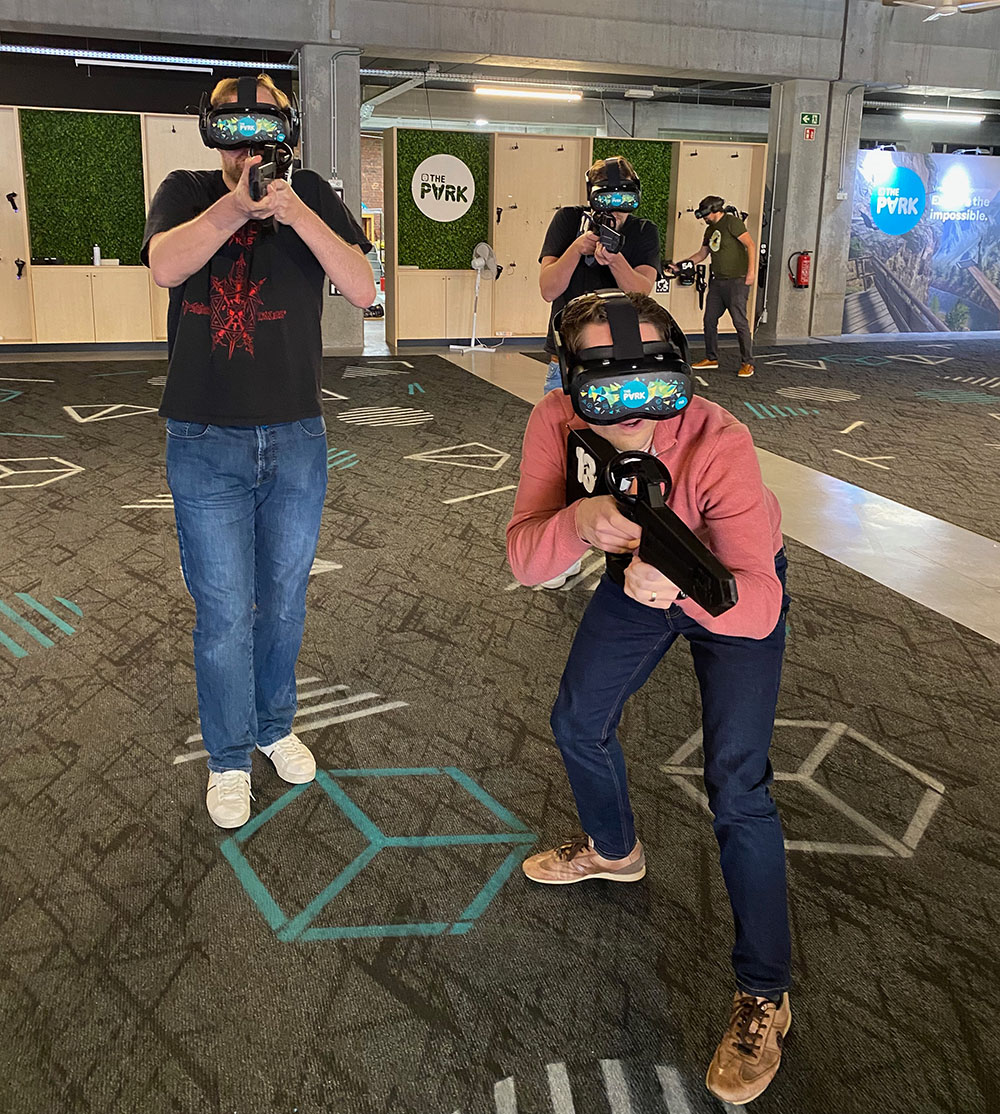
Cette approche peut fournir de bons résultats de positionnement avec une précision de 10 à 30 cm. Cependant, en raison de sa taille et de ses contraintes d’alimentation, elle est principalement limitée aux véhicules, aux robots et à certains casques VR. En comparaison, un système de suivi par caméra est nettement plus coûteux qu’une étiquette UWB bon marché. En revanche, il ne nécessite aucune infrastructure. Avec le suivi ultra-large bande, un investissement initial est nécessaire pour mettre en place l’infrastructure UWB et commencer le suivi. Une fois cette infrastructure en place, le coût de chaque étiquette UWB supplémentaire est négligeable. À l’inverse, avec le suivi par caméra, le coût initial est limité, mais le prix augmente fortement avec un plus grand nombre d’objets à suivre. Selon la zone à couvrir, le point d’équilibre peut déjà être atteint avec quelques actifs à suivre, ou avec plusieurs dizaines d’actifs. En général, si vous souhaitez suivre plus de 50 actifs, le positionnement UWB sera toujours plus rentable.
UWB versus systèmes de positionnement Wi-Fi (WPS)
Depuis son lancement, le Wi-Fi est devenu l’une des technologies de communication les plus importantes au monde. Quelques années après sa première sortie, il est devenu l’une des premières technologies utilisées pour le positionnement en intérieur. Le Wi-Fi reste aujourd’hui une technologie efficace pour le positionnement en intérieur, mais sa précision sous-optimale rend le suivi UWB plus adapté à une localisation précise.
Le positionnement Wi-Fi en intérieur utilise soit l’infrastructure existante, soit des capteurs installés sur mesure. Les deux offrent généralement une précision de 5 à 15 mètres, contre 10 à 30 cm avec la technologie ultra-large bande.
Au départ, le positionnement Wi-Fi était principalement utilisé pour suivre « approximativement » des appareils Wi-Fi tels que des ordinateurs portables et des smartphones dans un bâtiment. Plus récemment, cependant, les traceurs Wi-Fi alimentés par batterie gagnent en popularité, car ils sont utilisés en combinaison avec le GPS/GNSS. Ces traceurs recherchent les points d’accès Wi-Fi, renvoient ces informations vers le cloud (via 4G ou 5G), où une base de données mondiale des emplacements des points d’accès Wi-Fi est consultée. Ces bases de données sont collectées par de grandes entreprises technologiques comme Google, qui s’appuient sur le crowdsourcing via Google Maps. La précision est généralement limitée à plusieurs dizaines de mètres, mais l’avantage est qu’elle peut fournir une localisation intérieure approximative en solution de secours au GPS.
Pour être complet, il convient de noter que le Wi-Fi a ajouté en 2016 une fonctionnalité permettant un positionnement plus précis basé sur la portée. Cet amendement à la norme Wi-Fi de base (sous IEEE 802.11mc) pourrait permettre un positionnement précis à 1-2 m. Cependant, à ce jour, le taux d’adoption par les fournisseurs de points d’accès ou les fabricants d’appareils reste très limité, ce qui ne rend pas cette technologie viable (du moins pas encore).
UWB versus LIDAR
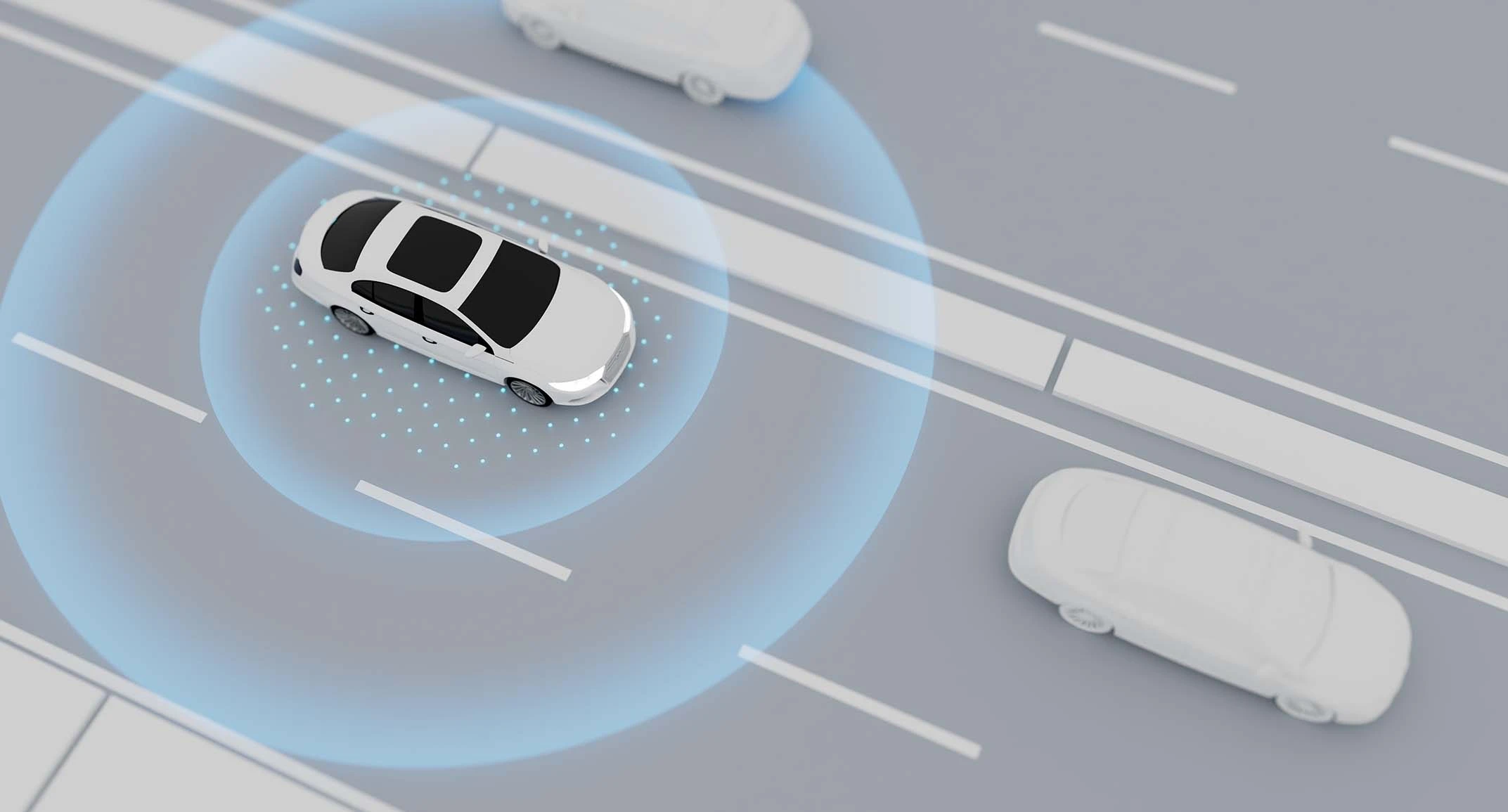
Le LIDAR, ou Light Detection And Ranging, fonctionne avec un laser rotatif pour mesurer avec précision la distance et l’angle par rapport aux obstacles. Son application la plus courante est dans les voitures autonomes. Dans un environnement industriel, il est également utilisé pour les robots mobiles autonomes (AMR) qui doivent naviguer de manière autonome sans heurter d’obstacles. De par sa nature, le LIDAR ne convient pas au suivi d’actifs non alimentés ou au suivi de personnes.
Le LIDAR, à lui seul, ne peut pas fournir de positionnement (absolu) ; il peut plutôt aider à comprendre s’il y a des obstacles autour du capteur. Dans certaines circonstances, lorsqu’une carte détaillée de l’environnement est disponible, la localisation peut être obtenue en faisant correspondre certaines caractéristiques statiques ou obstacles entre la sortie du LIDAR et la carte. Dans les scénarios comportant beaucoup d’objets en mouvement, des espaces ouverts ou des espaces avec des motifs répétitifs (comme un entrepôt avec des allées identiques), il n’est pas possible de se positionner uniquement de cette manière avec le LIDAR. En général, le LIDAR est utilisé en combinaison avec une autre technologie de localisation (comme l’UWB) pour le positionnement absolu. Grâce à la précision du LIDAR, il est alors possible d’améliorer le positionnement jusqu’à une précision millimétrique.
Conclusion
Bien qu’il existe de nombreuses technologies de suivi en intérieur, la technologie ultra-large bande est, dans la plupart des cas, la méthode de référence pour un positionnement précis en temps réel dans l’industrie 4.0. Dans ce tableau, les points abordés précédemment sont résumés.

Dans ce tableau, les cercles orange indiquent que pour le Wi-Fi et le GPS, la localisation peut être obtenue en temps réel, mais généralement avec un taux de mise à jour très faible (quelques fois par heure ou par jour). Les astérisques pour l’infrastructure BLE indiquent que dans certains scénarios (avec des points d’accès Wi-Fi prenant en charge le positionnement BLE), aucune infrastructure supplémentaire n’est nécessaire. Cependant, ce n’est pas le cas pour la plupart des points d’accès.
Vous souhaitez découvrir ce que le positionnement précis peut apporter à votre entreprise ? Planifiez un appel avec l’un de nos experts RTLS ; ils sont prêts à vous conseiller et à vous inspirer avec nos cas d’usage.
Ce que disent nos clients

Rédigé par
Melanie Deputter

Responsable marketing digital chez Pozyx